


What ingredients are in lawn fertilizer? Sunday products contain three main categories of ingredients:
- Macronutrients (N-P-K): Nitrogen, phosphorus, and potassium—the essential building blocks for grass growth
- Biostimulants: Natural growth enhancers like seaweed, humic acid, and molasses
- Naturally Derived Pesticides: Plant-based pest and weed control ingredients like pyrethrin and cedar oil
Macronutrients
Key Takeaways:
- Nitrogen (N) promotes rapid growth and green color; phosphorus (P) supports root development; potassium (K) builds stress resistance
- Sunday lawn fertilizers typically use N-P-K ratios like 22-0-2 or 18-0-6, with minimal phosphorus to protect aquatic ecosystems.
- These three nutrients form the foundation of all effective lawn fertilization programs
Nitrogen (N)
Nitrogen is a primary macronutrient essential for chlorophyll production and grass growth. Not only is nitrogen an essential element for all living things, but also it's what your grass needs the most—and it's the first number you'll see in those fertilizer ratios. You may recall from biology class that 80 percent of the air around us is already nitrogen. But it's not so easy to get that nitrogen to the soil, where the grass can use it. Even once it’s in the soil, plants can't use it until it's converted into nitrate or ammonium. That's where we come in. By encouraging the production of chlorophyll, nitrogen promotes rapid growth and lush, green color—basically, two of the main things you want from your lawn. No nitrogen? No growth. Period.
Found in: Lawn Fertilizers, Garden Fertilizers
Phosphorus (P)
Phosphorus is a macronutrient that supports root development, seedling growth, and nutrient absorption. It's the P in N-P-K. It's present in smaller amounts in plant tissue, but it's working hard behind the scenes helping out with rooting, seedling development, cell division, and the absorption of nutrients. But there's more to the story. Due to overfertilization and runoff, many regions are experiencing eutrophication, which causes mineral buildup and algal blooms in bodies of water.
What is eutrophication?
Eutrophication is the excessive enrichment of water bodies with nutrients (particularly phosphorus and nitrogen), leading to algal blooms, oxygen depletion, and harm to aquatic ecosystems.
Since this nutrient is usually plentiful in lawn soils, Sunday nutrient pouches use an extremely targeted and limited dose of phosphorus for those customers that have a deficiency in their soil. This helps to reduce any negative environmental impacts, while still giving the grass what it needs.
Found in: Lawn Starter, Garden Fertilizers
Potassium (K)
Potassium is a macronutrient that regulates water uptake, activates enzymes, and improves stress tolerance in grass. Its chemical symbol, K, comes from the neo-Latin kalium. It plays a vital role in regulating several physiological processes, the most important of which is activating enzymes used in protein, sugar, and starch synthesis (i.e. converting food into energy!). It moves readily through soil and also helps maintain turgor pressure, which keeps plants standing.
What is turgor pressure?
Turgor pressure is the internal water pressure within plant cells that keeps stems and leaves rigid and upright.
If your lawn is only slightly deficient in potassium, you may not immediately notice obvious visual signs or color changes, but your lawn will be more susceptible to drought, winter injury, and disease.
Found in: Lawn Fertilizers, Garden Fertilizers
Secondary & micronutrients
Calcium
Calcium is a secondary macronutrient that can help neutralize acidic soil and strengthen plant cell walls. Along with magnesium and sulfur, calcium is considered a secondary macronutrient in lawn fertilizers. It's most beneficial on soil that is overly acidic (this is where your soil test comes in handy!), because neutralizing soil pH helps plants absorb the nutrients they need to grow. Calcium also acts as something of a shield—a barrier between a plant's cells and potential pathogens such as bacteria and viruses.
Found In: Lawn Fertilizers
Iron
Iron is an essential micronutrient that promotes dark green color and supports chlorophyll synthesis. Did you know that plants pump iron too? Well, kind of. Iron helps your grass develop a dark emerald green color; in fact, a major symptom of iron deficiency in your grass is chlorosis, or yellow mottling of the blades.
What is chlorosis?
Chlorosis is a condition in plants characterized by yellowing of leaf tissue due to insufficient chlorophyll production, often caused by nutrient deficiencies.
But this is about more than just aesthetics. That darker green will help your grass warm up more quickly in the spring, thus kick-starting growth! Iron also plays a starring role in a variety of vital mechanisms including respiration, chlorophyll synthesis, and nitrogen metabolism.
Found in: Lawn Fertilizers, Pet Patch
Soil amendments
Humic acid
Humic acid is a soil conditioner derived from leonardite coal that improves nutrient uptake and soil structure. It's one of the most concentrated forms of organic material available to your soil, and has a positive impact on both the soil chemistry and the soil biology. It can boost aeration, water-holding capacity, and nitrogen uptake. Better nutrient uptake makes for a more efficient fertilizer—and we're all about that efficient, targeted approach!
Found in: Pet Patch, Lawn Fertilizer, Soil Boost
Surfactant
Surfactants are surface-acting agents that help fertilizers and water penetrate soil more effectively. Like all compounds, soil surfaces and liquid nutrients have a molecular charge. If those charges are not attracted to each other, the nutrients or irrigation will simply runoff and be wasted. Surfactants reduce that surface tension by breaking down adhesive properties, thus improving a product's ability to penetrate the soil and be absorbed more evenly. This is particularly helpful for improving patchy areas in your grass, and it can really improve moisture retention in soil that dries too quickly.
Found in: Pet Patch, Drought Defense, Water Focus, Heat Defense
Biostimulants
Key Takeaways:
- Biostimulants are natural substances that enhance plant growth, nutrient uptake, and stress tolerance without being fertilizers themselves
- Seaweed, molasses, and soy protein provide slow-release nutrients while improving soil biology
- Many biostimulants are industrial byproducts, making them environmentally sustainable choices
Soy protein
Soy protein is a natural, slow-release nitrogen source commonly used in organic lawn care. As a natural source of nitrogen used frequently in organic farming, soy protein is great for boosting lush grass growth and helping with plant stability over time. It provides a slow release of nutrients, which has a number of benefits: Lower risk of leaf burning, sustained grass growth, and less leaching. And, importantly, it results in similar plant growth and quality as synthetic fertilizers. But there is one big difference. Because soybeans are nitrogen fixing, they need less nutrients to become a nutrient source for other plants, making them a more sustainable source of nutrients for your lawn.
Found in: Lawn Fertilizers
Seaweed
Seaweed is a biostimulant rich in minerals, cytokinins, and growth-promoting compounds. This sustainably harvested plant is filled with powerhouse minerals and nutrients that help your grass grow lush and green (think nitrogen, potassium, magnesium, iron, zinc, and more). What's more, its low cellulose content allows it to break down quickly—meaning it gets to work on your soil right away. It's rich in cytokinins, which are often called "stay green" hormones because of their ability to slow chlorophyll degradation and enhance root growth. Finally, seaweed is high in moisture, which helps your soil stay saturated for longer and reduces your need to water as often.
Found in: Lawn Fertilizers, Pet Patch, Lawn Aid, Drought Defense
Molasses
Molasses is a natural surfactant and microbial food source that builds soil fertility. In addition to being a natural surfactant, molasses feeds the microbes in your soil to help build its fertility. It contains small amounts of key nutrients like manganese, magnesium, copper, and vitamin B-6. And the main reason it stands out? It's an industrial byproduct, which means we can give a second life to something that would otherwise go to waste! Save your soil, and save the planet while you're at it.
Found in: Green Out, Lawn Strong, Lawn Vitality, Water Focus
Beet juice extract
Beet juice extract is a biostimulant containing glycine betaine that helps plants tolerate drought stress. It stabilizes cell membranes and helps plants cope with drought stress. It's non-toxic, environmentally safe, and water-soluble. Finally, it's been shown to increase the rate of photosynthesis in stressed plants!
Found in: Super S
Naturally derived pesticides
Key Takeaways:
- Natural pesticides are derived from plants, minerals, or soil bacteria rather than synthetic chemicals
- Most are biodegradable, safe for pets when dry, and approved for organic gardening
- Different ingredients target specific pests: cedar oil for mosquitoes and ticks, pyrethrin for broad insect control, iron for broadleaf weeds
What is a biopesticide?
A biopesticide is a pesticide derived from natural materials such as plants, bacteria, or minerals, typically with lower environmental impact than synthetic alternatives.
Pyrethrin
Pyrethrin is a botanical insecticide derived from chrysanthemum flowers that kills insects on contact. This powerful pesticide is highly effective against various pests, including ants, mosquitoes, moths, flies, cockroaches, beetles, spiders, mites, and fleas. It's biodegradable (great for the environment!), safe for people and pets, and works on contact by attacking the insects' nervous system. Overall, it helps reduce out-of-control pest populations while avoiding the residual effects of long-lasting pesticides.
Found in: Custom Pest Plans, Bug Doom
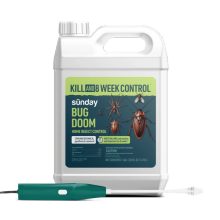
Bug Doom Home Barrier Spray
- Powered by pyrethrin and canola oil
- Fights dozens of different pests
- Patented technology
- Outdoor perimeter treatment
Spinosad
Spinosad is a biopesticide produced by soil bacteria that controls ants, thrips, and other crawling insects. A natural substance produced by a soil bacterium, spinosad contains a neurotoxin that affects a variety of insects like ants, earwigs, cricket, pillbugs, and more. For colony control, it's often formulated as bait granules that ants carry back to the mound—working quickly and effectively on contact. Many formulations are approved for organic gardening, and it's non-toxic to pets. In fact, many pet soaps include spinosad to keep away bugs.
Found in: Ant Adios
Iron
Wait, iron again? This hardworking element is a key component of our nutrient pouches and helps your lawn grow lush and green, but it can also be deadly to weeds! Iron-based herbicides are safer than many traditional products because iron doesn't volatilize (evaporate) once it's on the plant. Broadleaf weeds (like dandelions and chickweed) will absorb it in quantities high enough to cause necrosis —drying out then turning black— within a few hours of application. Since grass has a higher requirement for this nutrient, it’s safe to apply to your grass without causing damage.
Found in: Dandelion Doom
Herbicidal soap
Herbicidal soap is a fast-acting, non-selective weed killer made from ammoniated fatty acid salts. In essence, it breaks down the leaf cuticle leading to rapid leaf death. In fact, you may begin to see results in as little as 20 minutes! It's biodegradable, approved for organic gardening, and won't harm your trees (i.e., great for treating poison ivy vines). However, it is non-selective, which means it can damage your grass if it’s directly applied to the blades.
Found in: Weed Warrior
Cedar oil
Cedar oil is an essential oil derived from the wood of various conifers (typically in the pine or cypress families). It is an effective fungicide and insect repellent. It targets mosquitoes, ticks, and moths especially well, killing adult insects on contact by dissolving their exoskeletons. The EPA considers it a minimum-risk pesticide because of its low mammalian toxicity and low risk to the environment.
Found in: Nix Ticks, Mosquito Deleto
Lemongrass oil
The Lemongrass plant is a natural mosquito repellent. The oil contains citral, effective at repelling multiple mosquito species. In addition to its invigorating citrus like scent, the oil is prized for its ability to knock down and repel mosquitos. Lemongrass is a common ingredient in many global cuisines (in other words, non-toxic to humans!), making it an easy choice for mosquito control.
Found in: Mosquito Deleto
Frequently Asked Questions
Frequently Asked Questions
What is N-P-K in fertilizer? N-P-K stands for nitrogen (N), phosphorus (P), and potassium (K)—the three primary macronutrients in fertilizer. The numbers on a fertilizer bag (such as 22-0-2) indicate the percentage of each nutrient by weight.
What does nitrogen do for lawns? Nitrogen is the most important nutrient for lawn growth. It promotes chlorophyll production, which gives grass its green color, and drives rapid blade growth. Without adequate nitrogen, grass will appear pale, grow slowly, and struggle to recover from stress or damage.
Are natural lawn care ingredients safe for pets? Yes, Sunday's naturally derived ingredients are formulated to be safe for pets and children when used as directed. Ingredients like seaweed, molasses, and soy protein are non-toxic, while natural pesticides like pyrethrin and cedar oil have low mammalian toxicity. Always allow products to dry before letting pets on treated areas.
What are biostimulants in lawn care? Biostimulants are natural substances that enhance plant growth and health without being fertilizers themselves. They include ingredients like seaweed extract, humic acid, and molasses. Biostimulants improve nutrient uptake, stimulate beneficial soil microbes, and help grass tolerate environmental stresses like drought and heat.
Cited sources
Benefits of Using Lawn Fertilizers Containing Slow Release Nitrogen. Michigan State University Extension.
Cedarwood Oil Profile. Cornell University Library.
Controlling Fire Ants in the Vegetable Garden. Clemson Cooperative Extension.
Foliar Application of Glycinebetaine—a Novel Product from Sugar Beet—as an Approach to Increase Tomato Yield. Science Direct.
Lemongrass Oil Profile. New York State Integrated Pest Management Program.
Natural Herbicides for Landscape Weed Management. Colorado State University Extension.
Organic Fire Ant Control. Mississippi State University Extension.
Soy Biocomposite Turfgrass Fertilizer. Iowa State University.
Turfgrass Fertilization: A Basic Guide for Professional Turfgrass Managers. PennState Extension.