


Why Fall Is Your Cool Season Lawn's Most Important Season
Here's a secret the lawn care industry doesn't lead with: the lawn you'll have next June is mostly built in September and October. Fall is when cool-season grasses do their most serious root growth, when soil temperatures are perfect for new seed, and when your lawn stores the energy it needs to green up early next spring.
And here's the part we love: you don't need a truck in your driveway to do this well. In fact, you're in a better position than any service tech on a route. You know where your lawn stays soggy, where the dog runs, where the shade creeps in by 2 p.m. A plan tailored to your climate, your soil, and your lawn's actual conditions will always outperform a one-size-fits-most treatment schedule.
This guide covers the whole fall playbook: exact timing windows by grass type, soil testing, fertilization rates, overseeding steps, weed control, mowing, watering, the most common fall mistakes to avoid — and an honest cost comparison between doing it yourself and hiring it out.
The Four-Season Framework (and Why Fall Gets Top Billing)
Spring: The Setup Season
Spring is about waking your lawn up gently. Rake out winter debris, check for snow mold or matted spots, and hold off on feeding until grass is actively growing. If crabgrass has been a problem, early spring (when soil temps hit 50-55°F) is the window for applying a pre-emergent like Weed & Green. But here's the thing: a lawn that got great fall care will be thicker and better able to keep crabgrass away naturally the following spring.
Summer: Stress Management
Summer is survival mode, especially for cool-season lawns. Mow high (3–4 inches), water deeply but infrequently (typically 1 - 1.5 inches per week unless you’re seeing regular rainfall), and watch for heat stress, grubs, and fungal issues. Think of summer as the time to take your foot off the gas, not to floor it- do too much, and we can easily end up causing more harm than good to the lawn. This is a great time to take a step back, identify your problem areas, and work through a plan and be able to hit the ground running come fall.
Fall: The Critical Window
This is where the real work (and the real payoff) happens. Roots grow deepest, stubborn broadleaf weeds respond faster to an application of Dandelion Doom or Weed & Green, grass seed germinates with less weed pressure, and nutrients get stored for winter. Everything in the deep dive below happens here.
Winter: Rest and Protect
Once your lawn goes dormant, the best care is mostly hands-off. Limit foot traffic on frozen or dormant grass, keep leaves and debris cleared to prevent snow mold, and go easy on ice melt near turf edges (these products can stress grass and soil). Then enjoy the break. You and your lawn have earned it.
Fall Lawn Care Deep Dive: Your Complete Playbook
Soil Variables to Consider and Fertilizer Selection
Fall is a great time to revisit your soil test (or complete one if you haven’t already). You get results while there's still time to act, and amendments like lime have time to work slowly, setting your lawn up for success in the spring!
What to review:
- pH - the master dial. Most cool-season grasses prefer a pH of 6.0–7.0, with 6.0–6.5 as the sweet spot. Keep in mind that grasses can tolerate a wide range of pHs, but lime can be added to raise the soil pH of very acidic soils while sulfur amendments may help to lower the soil pH of very alkaline soils.
- Nitrogen (N) - this is the macronutrient needed in the greatest concentration to help the grass grow, but be careful - encourage too much leaf growth in the late fall, and you can unintentionally be setting the grass up for winter damage.
- Why the deadline matters: Fertilizing too close to frost encourages new growth with a high water content that winter temperatures can damage easily. You end up paying for fertilizer that makes your lawn weaker. (More on this in the mistakes section below.) Sunday's nutrient pouches take the math out entirely: each is portioned and formulated for your lawn size and region, and our pesticide-free fertilizers feed your grass while building healthier soil underneath it.
- Phosphorus (P) - supports root development, but most established lawns already have plenty available in the soil. Only add it if your soil test shows a deficit. Many states restrict phosphorus applications for good reason — runoff of this nutrient can be incredibly toxic to aquatic ecosystems. If you’re a Sunday Lawn plan subscriber and your soil test shows a lack of phosphorus, we’ve got you covered. Your plan will automatically adjust to include the Lawn Starter pouch and address this deficiency.
- Potassium (K) - the macronutrient typically considered to be most important to include in the fall. While early fall potassium applications can be helpful for a lawn recovering from summer stressors, conventional “winterizers” with high amounts of potassium applied late in the fall may actually increase the lawn’s susceptibility to early spring lawn diseases like snow mold! Potassium works by strengthening cell walls, and improving cold hardiness before the winter, but most soils already have an adequate amount of potassium, and for this nutrient, more isn't better, it's just more. The grass uses what it needs, and leaves the rest behind in the soil.
Fall Fertilization: Feed the Roots, Not the Blades
Fall fertilizer has a different job than spring fertilizer. In spring, you're feeding top growth. In fall, you're feeding roots and energy storage. With a custom lawn plan, each application is portioned and timed for your lawn size and region, and our pesticide-free fertilizers feed your grass while building healthier soil underneath it.
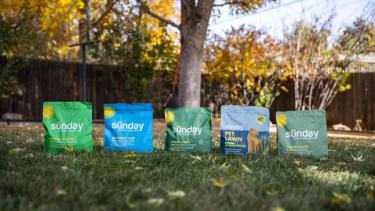
Seeding: The Highest-Impact Fall Project
Seeding in fall is the single best way to thicken a cool-season lawn , and a thick lawn is your best long-term weed prevention. Here's how to do it right.
When: Temperatures are between 50–65°F, ideally 6-8 weeks before your first frost so seedlings can establish. For most cool-season regions, that's late August through late September.
Getting seed-to-soil contact (the make-or-break step):
- Mow slightly lower than usual (make sure to not remove more than 1/3rd of the blade length in one cut) and bag the clippings.
- Rake out dead grass and debris, or core aerate first if your soil is compacted.
- Spread seed at the rate on your bag (as low as 2 lbs. per 1,000 when overseeding with bluegrass to as much as 8 lbs. Per 1,000 sq. ft. when seeding bare sections from scratch with fescue).
- Lightly rake so seed settles into the top ¼ inch of soil, or cover lightly with a layer of topsoil (~¼” thick). Seed sitting on top of thatch dries out and goes nowhere.
Watering schedule after seeding (be specific, be consistent):
- Weeks 1–2: Water lightly 2–3 times per day, just long enough to keep the seed moist (not to the point where it is pooling, but also not letting the seed dry out).
- Weeks 3–4: Once most seed has germinated, drop to once daily, watering a bit deeper.
- Week 5 and beyond: Transition to your watering schedule for the established lawn (typically ~1” of water per week, unless we’re seeing regular rainfall)
What to avoid:
- Don't mow until new grass reaches about 3 inches tall - usually 3–4 weeks after seeding. And even then, use a sharp blade and take off no more than one-third.
- Keep foot traffic (and dog traffic) off seeded areas for 3–4 weeks. Seedling roots are shallow and fragile.
Weed Control in Fall: Work Smarter, Not Harder
Still dealing with pesky patches of perennial broadleaf weeds like creeping Charlie? Fall is one of the best times to tackle weeds - when weeds are preparing for winter, they are actively sending nutrients to their roots, meaning that if an application of Dandelion Doom or Weed & Green is applied, we’ll see improved uptake and better control of the root system at this time!
Keep in mind that Sunday follows Integrated Pest Management (IPM) guidelines: prevention first, targeted treatment only where needed.
- Your best defense is the lawn itself. Dense fall-seeded turf leaves no bare soil for winter annual weeds (like henbit and chickweed) or next spring's crabgrass to move into. Tend to struggle with summer annuals like crabgrass? Seeding now is a win-win: the grass won’t have to compete with summer annuals since they aren’t germinating at this time, and when they begin in the spring, the grass will already be established/better able to choke out the weeds!
- Spot-treat, don't blanket-spray. For the majority of broadleaf weeds, Dandelion Doom or Weed & Green are great options. Treat only areas with weeds, not the whole lawn. not the whole lawn.
- Skip pre-emergents. Pre-emergent products stop all seeds from establishing — including your grass seed. If you're overseeding this fall,skip the pre-emergent, and wait until new grass has been mowed 2–3 times (typically 4–6 weeks after germination) before applying any post-emergent weed treatments nearby. Young grass is more susceptible to injury. Let the frost take care of these weeds later if needed, but give the grass time to establish. After all, the goal is healthy grass, not dead weeds.
Mowing in Fall: Taper Down, Don't Chop Down
Keep mowing as long as your grass keeps growing (typically some time in October or November).
- Early fall: Stay at your summer height (3.5–4 inches for cool-season grass) to shade out weeds and support recovery.
- Mid to late fall: Gradually lower your deck down to 3-3.5 inches as temperatures begin to drop and (hopefully) there’s a bit more precipitation. Keep the grass too long through the winter, and we may see diseases like rust or red thread pop up in the spring. Never remove more than one-third of the grass blade in a single mow.
- Final mow before dormancy: 2.5-3 inches for cool-season grasses Shorter blades resist matting under snow and discourage snow mold, but cut too low, and you may stress the grass and end up creating the perfect environment for weeds to take hold over the winter/into spring.
- Frequency: Growth slows as temps drop, so your mowing naturally tapers from weekly to every 10–14 days, then stops altogether. Follow the grass, not the calendar.
Bonus: mulch fallen leaves right into the lawn with a sharp blade as long as you can still see grass through the shredded bits. It's free organic matter for your soil. If the mulch starts to pile up, use a lawn blower or a rake to spread the mulch around a bit and avoid smothering any areas of the lawn.
Watering and Irrigation: The Fall Wind-Down
As growth slows, so should your watering.
- Early fall: When temperatures are still between 70-85 degrees, cut back to 1 inch of water per week (including rainfall). If you’re having a rainy fall, you can save on your water bill.
- Mid-fall: As temperatures drop below 70°F consistently, taper to ½ inch per week or less. Cooler air and morning dew do more of the work.
- The final deep water: If you’re getting enough rain, skip this step. For more arid regions where the soil is lacking moisture, give your lawn one last deep soak. We want to do this before the ground freezes — typically late October to mid-November, depending on region. Hydrated roots and soil handle winter far better than dry ones.
- Irrigation systems: Winterize (blow out lines) after that final watering, before your first hard freeze.
One more reason fall watering discipline pays off: deep, infrequent watering all season trains roots to grow down, not sideways. Deep roots are what carry your lawn through next summer's heat with less water and less stress.
5 Fall Lawn Care Mistakes That Undo All Your Hard Work
Every one of these is avoidable, and avoiding them is where DIYers with good information beat autopilot service schedules.
Over-fertilizing before dormancy
Too much nitrogen too late pushes soft, fast top growth right before frost. That tender growth is the first thing winter damages, and unused nutrients wash away in fall rains. You're literally paying to weaken your lawn.
Have a lawn plan already? Stick to your application schedule to avoid over-fertilizing, and for folks without a plan, an application of Fall Fortify Plus Micronutrients is a great choice to put down a little fertilizer without encouraging too much growth!
Seeding too late
Once nighttime lows start to drop below 40 degrees, there’s a risk that any grass that germinates will not survive the frosts or have time to develop deep enough roots to survive the winter.
If you missed the fall window, save your seed budget for spring or wait for your frost seeding window to dormant seed.
Mowing too short (scalping)
Cutting below 2.5 inches in one dramatic final mow exposes the crown, shocks the plant, and invites winter injury. Taper down gradually over several mows instead.
Applying pre-emergent and overseeding in the same window
Pre-emergent herbicides will prevent both weed seeds and grass seeds from germinating. Which means we’re paying to grow nothing. If you’re seeding, make sure to avoid pre-emergent applications.
Under-watering after seeding
The number one reason seeding "doesn't work." A germinating seed that dries out even once can die. Commit to 2–3 short waterings per day for the first two weeks, or wait for a season when you can rely on rainfall to provide that water for you.
Ready to Give Your Lawn Its Best Fall Ever?
Fall rewards a little planning more than any other season. Start with the foundation: a soil test. It tells you exactly what your lawn needs — and what it doesn't — so every dollar and every hour you spend this fall actually moves the needle.
Sunday's Custom Lawn Plan starts right there. We analyze your soil, your climate, and your lawn's conditions, then ship pesticide-free fertilizer portioned for your exact square footage and timed to your region's fall window. Need to thicken things up or spot-treat some dandelions? Add grass seed and Weed Warrior to your Sunday plan and knock out your whole fall checklist in one go.
Your best lawn ever starts this fall — and it starts with you.
Let's get growing
Your best lawn starts this fall