


While your grass is still waking up, weed seeds are already germinating. The window to stop them is short, and timing matters more than most people realize.
Miss it and you're playing defense all summer.
Here's how to get ahead of them.
How to prevent spring weeds in your lawn
Scout your lawn for trouble spots
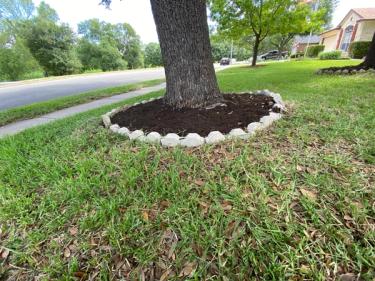
Weeds don't appear randomly. They show up where grass is thin or stressed. Their favorite spot is where grass is missing entirely.
Walk your yard in early spring, right as your lawn starts greening up. Look for the following:
- areas damaged by winter
- pet spots
- shady patches under trees
- compacted soil near walkways
- anywhere foot traffic wore things down last year.
These are your priority zones.
If you catch these spots early, you can fix them before weeds move in. If you wait, weeds will find them first.

Sunday Tip:
Compacted or discolored patches? Consider aerating or topdressing before you seed. Weeds love compromised soil.
Apply pre-emergent before weeds germinate
Timing is everything for this step.
Pre-emergents, like Weed & Green, work by creating a barrier in the soil that stops weed seeds from growing. Apply too early and the barrier breaks down before weeds arrive. Too late and they're already up.
When should you apply pre-emergent?
When soil temps reach 50 to 55°F for several consecutive days. Usually late winter to early spring depending on where you live.
Weed & Green prevents crabgrass and broadleaf weeds before they sprout. Apply before fertilizing your lawn. Reapply 3 to 6 weeks later for best results.
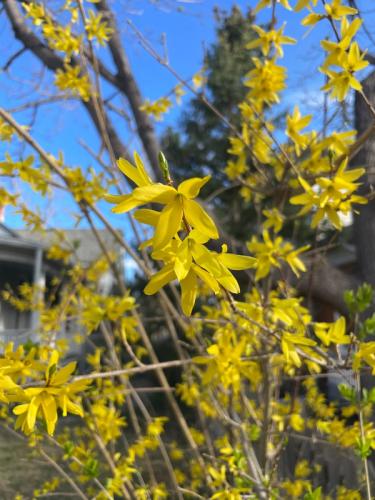
A reliable trick: when you see forsythia (those pretty yellow flowers on woody shrubs in early spring) blooming, you're in the window.
Pull weeds that already emerged
Pre-emergent won't help weeds that are already growing. For those, you need to remove them manually or treat them with post-emergent herbicide.
Should you pull weeds or spray them?
Young weeds are easy to pull. The roots are shallow and you're usually not tearing up your lawn to get them. A weeding tool or screwdriver works well for more established weeds or deep taproots like dandelions.
Wait a few weeks and that changes. Once weeds spread, the plant gets tougher to manage and pulling becomes a losing battle.
If you've got scattered weeds, pull them by hand. If it's more than you can manage that way, move to step 4.
Sunday Tip:
Not sure what you're dealing with? The weed ID guide can help.
Treat remaining weeds with post-emergent
Once weeds are up and growing, you've missed the window for pre-emergent. Switch to post-emergent, which kills existing weeds rather than preventing new ones.
Which Sunday weed control product should you use?
For broadleaf weeds (dandelions, clover, chickweed): Dandelion Doom treats existing weeds, moss, and lawn diseases without harming grass. Use when temps are below 85°F. Apply every 3 to 4 weeks as needed.
For grassy weeds (crabgrass, dallisgrass, goosegrass): Weed Warrior is a non-selective, post-emergent that works anytime during the growing season. Apply every 2 to 3 weeks as needed.
Helpful tips:
- Remove large weeds manually before spraying.
- Apply in mild temperatures, ideally morning or evening.
- Fully cover weed leaves with spray and let dry.
- Avoid application if rain is forecast within 3 hours.
For detailed application rates and timing, see Sunday weed control instructions.

Fill bare spots before weeds move in
A thick lawn crowds out weeds. It's that simple.
Even healthy lawns lose some grass over winter. Patching bare spots in spring means weeds don't get an opening. You're filling the vacancy before they can move in.
When should you seed your lawn in spring?
Cool-season grasses (fescue, bluegrass, rye): once average temps hold above 55°F.
Warm-season grasses (bermuda, zoysia, centipede): wait until average temps stay above 70°F.
If you've got a warm-season lawn like St. Augustine that can't be overseeded, plugging or sodding thin areas works too. The goal is the same: don't leave gaps.
Can you kill weeds and seed grass at the same time?
It's tricky. If you're planning to overseed, you need to time things carefully.
Your options: seed first and skip the weed control in that area, or apply Sunday’s Weed & Green (or Dandelion Doom) and wait at least 24 hours before seeding. Ideally, wait until weeds die back, rake away dead plant material, then seed.
Weed Warrior requires at least 5 days between treatment and planting. For other herbicides, check the label.
Fertilize to strengthen your lawn
Healthy grass outcompetes weeds. Once your lawn is actively growing, feed it.
Apply fertilizer after weed control products have dried, usually 24 to 48 hours later.
Sunday Tip:
See our guide on how Sunday products work together for timing details.
How do you keep weeds out all season?
Stopping spring weeds is a good start. Keeping them out takes a few ongoing habits.
Water deeply, not often
Overwatering encourages shallow roots and fungal problems. Underwatering stresses grass and opens the door for weeds. About an inch a week, watered deeply rather than frequently, keeps your lawn in good shape.
If you're not sure whether you're over or under, check out Sunday's watering guide.
Mow at the right height
Taller grass shades the soil, which makes it harder for weed seeds to germinate. Most cool-season lawns do best at 3 to 4 inches (while warm-season’s sweet spot is 2-3 inches), and cutting too short is one of the easiest ways to invite weeds back.
Our mowing height chart helps you find the right height for your grass type.
Overseed annually
Our “pro” of pro tips: seeding isn't a one-time thing. To keep weeds out for good, overseed your lawn each year. Lawns with heavy weed pressure may need seeding twice per season until the turf thickens enough to hold its ground. (And this can take a few years.)
Spot-treat what shows back up
Even with prevention, some weeds will get through. Catching them early and treating them individually keeps small problems from becoming big ones. Dandelion Doom and Weed Warrior both work for targeted spot treatment throughout the season.
Ready to get started?
We'll map your lawn and build a plan based on your soil, climate, and what's actually growing in your yard.
Cited sources
Auditing home lawn irrigation systems. University of Minnesota
Essential Tips for a Healthy Lawn, Part I. University of Minnesota Extension.
Lawn care calendar. University of Minnesota Extension.
Managing Weeds in Lawns. University of Minnesota Extension.
Turgeon, A.J. and J.E. Kaminski. Turfgrass Management.
Water Wise Lawns. Cornell University Extension.