


Spring lawn fertilizer should deliver a balanced ratio of nitrogen, phosphorus, and potassium tailored to what your soil actually needs, and applied when your grass is heading into peak growth. Understanding these fundamentals before you buy is the key to achieving a healthier, greener lawn without wasting money or risking damage to your turf.
This guide walks you through fertilizer selection and application for spring 2027. Whether you're a seasoned weekend warrior chasing the greenest lawn on the block, a first-time homeowner trying to avoid costly mistakes, or someone prioritizing pet and environmental safety, you'll find science-backed guidance here that bridges the gap between university research and practical product choices.
What Is Lawn Fertilizer and How Does It Work?
Lawn fertilizer is any material—natural or synthetic—applied to soil or turf to supply essential plant nutrients that grass needs to grow, develop strong roots, and maintain vibrant color. Fertilizers work by delivering nutrients directly to the lawn where they can be used for cellular processes like photosynthesis, protein synthesis, and energy transfer.
There are 17 essential nutrients that all plants require, but three primary macronutrients do the heavy lifting for lawn health: nitrogen (N), phosphorus (P), and potassium (K). Nitrogen drives leaf and blade growth, giving your lawn that lush green appearance. Phosphorus supports root development and energy transfer within the plant. Potassium strengthens overall plant health, helping grass resist disease, drought, and temperature stress.
When you apply fertilizer, you're essentially giving your lawn the building blocks it can't manufacture on its own or can't access in sufficient quantities from your existing soil. The goal isn't just to make grass green temporarily—it's to build a sustainable nutrient cycle that supports long-term turf health.
Understanding Fertilizer Numbers: Nitrogen, Phosphorus, and Potassium
The three numbers on every lawn fertilizer label represent the percentage by weight of nitrogen, phosphorus, and potassium in that product, always listed in N-P-K order. A bag labeled 20-5-10 contains 20% nitrogen, 5% phosphorus, and 10% potassium, with the remaining percentage made up of other nutrients or filler materials that help distribute the nutrients evenly.
These lawn fertilizer numbers determine what kind of nutritional boost you're giving your turf. A high first number means the fertilizer emphasizes blade growth and green color. A higher middle number supports root establishment, which is particularly important for new lawns or areas recovering from damage. A strong third number can help your grass prepare to handle environmental stress.
For most established lawns in spring, nitrogen fertilizer is the primary driver of results. Nitrogen is the nutrient grass consumes most, and it’s not always available from the soil. While applying some nitrogen is beneficial to the lawn, too much nitrogen can lead to unchecked growth, and contribute to runoff pollution in ground water and coastal regions.
Phosphorus fertilizer plays a different role. While this nutrient supports root development, many soils already contain adequate phosphorus, and some regions restrict phosphorus application due to water quality concerns. Like nitrogen, too much phosphorus doesn’t benefit the grass, and can damage the ecosystem. Before adding phosphorus to your spring routine, you need to know whether your soil actually needs it.
Potassium is like nitrogen, and most lawns benefit from small amounts of potassium applied through the season. Since this nutrient is also present in most soils, and is needed in lower amounts than nitrogen, we apply far less potassium than nitrogen, unless the soil test indicates a deficiency.
This is why soil testing matters more than any product recommendation. Using Sunday's soil test kit and analysis reveals your lawn's current nutrient profile, pH level, and organic matter content—information that transforms fertilizer selection from guesswork into precision. For a deeper exploration of how these ratios apply specifically to turf, the NPK guide for lawns breaks down the science in practical terms.
When to Apply Spring Lawn Fertilizer by Grass Type
The best time to apply spring lawn fertilizer depends entirely on whether you have cool-season or warm-season grass, because these two categories have different growth cycles and nutrient timing needs. Getting this wrong doesn't just waste fertilizer—it can actively harm your lawn by pushing growth at the wrong time.
Cool-season grasses like Kentucky bluegrass, tall fescue, and perennial ryegrass thrive when soil temperatures are between 50°F and 65°F. These grasses experience their most vigorous growth in spring and fall, with a summer slow down due to the heat.. For cool-season lawns, the ideal spring fertilizer window typically falls between late March and mid-May, depending on your region. Apply too early, when the soil is still cold, and the nutrients sit unused. Apply too late, and you're pushing tender growth right before summer heat arrives.

Sunday Tip:
Let the lawn tell you when it’s ready. Wait until 60% of the lawn is green and actively growing again, and you’ll be right on time.
Warm-season grasses like bermuda grass, zoysia, St. Augustine, and centipede operate on a different schedule. They break dormancy later in spring and hit peak growth during summer heat. Bermuda grass fertilizer timing, for example, should wait until soil temperatures consistently reach 65°F or higher—usually late March through May depending on your region. Fertilizing warm-season grass too early, while it's still semi-dormant, wastes product and can encourage weed competition. If your grass turns brown during the winter, wait for that 60% green up before fertilizing. If your lawn stays green, but stops growing through the winter, wait until it starts growing again, and you’ll time it perfectly.
Regional restrictions also affect timing. Some states and municipalities enforce fertilizer blackouts during certain months to protect waterways, so check local regulations before you apply.
Granular vs. Liquid Fertilizer: Which Is Right for Your Lawn?
Granular fertilizer releases nutrients slowly over weeks as the pellets break down, while liquid fertilizer delivers nutrients immediately in a form grass can absorb right away. Both formats work, but they serve different purposes and fit different lawn care styles.
Granular fertilizer is a common choice for most homeowners. You spread it with a broadcast or drop spreader, water it in, and let it feed your lawn gradually over four to eight weeks depending on the formulation. This slow-release approach requires fewer applications per season, and provides steady nutrition that supports consistent growth. The tradeoff is less immediate visual impact—you typically won't see dramatic greening overnight.
Liquid fertilizer works faster. Because the nutrients are already dissolved, grass blades and roots can absorb them almost immediately after application. This makes liquid ideal for quick green-up before an event, for addressing visible nutrient deficiencies, or for homeowners who prefer more frequent, lighter feedings. Liquid also allows for more precise applications in targeted areas.
The choice often comes down to your schedule and preferences. If you want a set-it-and-forget-it approach with fewer applications, granular makes sense. If you prefer more control and don't mind applying more often, liquid gives you flexibility. Many experienced lawn owners use both: granular as a foundation and liquid for supplemental feeding or spot treatment.
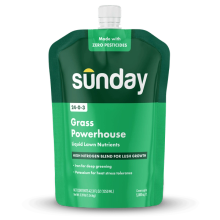
Grass Powerhouse
- 24-0-3 NPK
- Drives steady growth
- Iron for deep greening
- Seaweed and Potassium for heat resilience
For those leaning toward liquid options, Grass Powerhouse liquid lawn fertilizer offers a straightforward entry point. Detailed guidance on application technique is available in the liquid lawn fertilizer instructions, which covers everything from dilution ratios to spray patterns.
Best Fertilizer Options for Spring 2027
The best fertilizer for your spring lawn in 2027 is one that addresses your soil's specific deficiencies while matching your personal priorities for convenience, safety, and environmental impact. No single product wins for everyone, but this guide can help you make an informed choice.
For lawns needing a nitrogen boost to recover from winter dormancy and push spring green-up, look for fertilizers with a higher first number in the N-P-K ratio. Nitrogen fertilizer drives the blade growth that creates that dense, vibrant appearance homeowners want.
If your soil test reveals low phosphorus, a balanced or phosphorus-forward formula supports root development during the critical spring establishment window. However, if your soil already has adequate phosphorus, adding more is wasteful and potentially harmful to local waterways.
Organic options like blood meal fertilizer or compost provide nitrogen from natural sources and release nutrients more slowly as soil microbes break down the material. This approach feeds both your grass and your soil biology, building long-term health rather than just short-term color.
For homeowners who want a ready-to-apply liquid option that simplifies spring feeding, Iron Boost liquid fertilizer delivers balanced nutrition in an easy-to-use format. It's designed for the homeowner who wants effective results without the complexity of mixing custom blends.
Pet-Safe and Eco-Friendly Lawn Fertilizer Alternatives
Pet-safe and eco-friendly lawn fertilizers prioritize formulations that minimize risk to children, animals, and local ecosystems while still delivering effective nutrition to your turf. These products typically avoid harsh synthetic chemicals, use naturally derived nutrient sources, and break down in ways that don't persist in the environment or leach into waterways.
For households with dogs, cats, or young children who spend time on the lawn, the primary concerns are direct contact with fertilizer granules and exposure to chemical residues on grass blades. Many conventional fertilizers require a waiting period after application before the lawn is safe for foot traffic. Check out our 5 Tips for a Pet Friendly Lawn.
Even the most natural fertilizers can be problematic for the environment if not applied correctly or to the correct areas. Make sure to follow any label instructions for rate and timing of applications closely, and make sure to allow a buffer zone around storm drains, runoff points, or nearby bodies of water. Eco friendly lawn care starts with how we care for the lawn. Making a few changes to your care routine not only helps the environment, but will make your lawn more self-sufficient.
Get Your Custom Spring Fertilizer Plan from Sunday
Choosing the right spring fertilizer becomes dramatically simpler when you have a plan built specifically for your lawn's grass type, soil conditions, and local climate. Rather than guessing at products or following generic advice that may not apply to your situation, a personalized approach ensures you're feeding your lawn exactly what it needs—nothing more, nothing less.
Sunday builds custom lawn plans based on your specific address, soil analysis, and grass variety. This takes the overwhelming number of fertilizer choices and narrows them down to a program designed for your yard. You can see what other homeowners have experienced by reading Sunday lawn care reviews before committing.
Get your custom spring lawn plan to take the guesswork out by building a fertilizer program matched to your specific lawn.
Frequently Asked Questions
What do the numbers on lawn fertilizer labels mean?
The three numbers on lawn fertilizer labels represent the percentage of nitrogen, phosphorus, and potassium in the product, always in that order (N-P-K). A 20-5-10 fertilizer contains 20% nitrogen, 5% phosphorus, and 10% potassium by weight.
When is the best time to apply spring lawn fertilizer?
The best time to apply spring lawn fertilizer is when soil temperatures consistently reach the growth threshold for your grass type—50°F to 65°F for cool-season grasses, 65°F or higher for warm-season varieties. For most regions, this usually means late March through mid-May for cool-season lawns and late March through May for warm-season turf. Watch for signs that your lawn is actively growing again before fertilizing.
What is the best fertilizer for bermuda grass in spring?
The best fertilizer for bermuda grass in spring is a nitrogen-forward formula applied after soil temperatures consistently reach 65°F or higher, signaling the grass has broken dormancy and entered active growth.
Can I just sprinkle granular fertilizer on top of my lawn?
You can spread granular fertilizer on top of your lawn, but you must water it in thoroughly after application for the nutrients to reach the root zone where grass can absorb them. Leaving granules sitting on grass blades can cause fertilizer burn and waste the product. Apply with a calibrated spreader for even distribution, then irrigate with about a quarter inch of water to move the nutrients to the root zone.
What is the difference between organic and synthetic lawn fertilizer?
Organic lawn fertilizers derive nutrients from natural sources like plant matter, animal byproducts, or minerals, and often release nutrients slowly as soil microbes break down the materials. Synthetic fertilizers are manufactured chemically and often release nutrients faster in forms immediately available to plants. Organic options can help build long-term soil health and carry lower burn risk, while synthetic options deliver quicker visible results but may require more careful application.
Is weed and feed fertilizer safe for kids and pets?
Weed and feed fertilizer safety for kids and pets depends on the specific herbicide ingredients and requires following label instructions for re-entry timing. Most weed and feed products require keeping children and pets off the treated area until the product has been watered in and the lawn has dried completely, typically 24 to 48 hours. A quick check of the SDS for any product you’re considering helps keep you informed about any potential risks.
Can too much nitrogen fertilizer burn your lawn?
Yes, too much nitrogen fertilizer can burn your lawn by creating a salt concentration in the soil that draws moisture out of grass roots and blades, causing brown, dead patches. This is more common with fast-release synthetic nitrogen sources like urea nitrogen fertilizer when applied at excessive rates, when the grass is already stressed, or without adequate watering. Following label application rates, calibrating your spreader correctly, and watering thoroughly after application prevents nitrogen burn.