


One of the most common questions we get: "What do I do with the packaging when I'm done?" This Sunday product recycling guide breaks it all down so you know exactly what to recycle, what to trash, and how to do it right.
Are Sunday lawn care bottles recyclable?
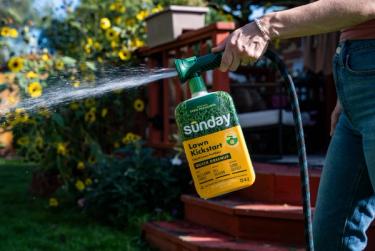
Yes. Our rigid bottles (the ones you find at Home Depot, Walmart, Target, Costco, and Ace) are recyclable. But there are two things you need to do first.
- Remove the shrink label. Most fertilizer bottles get rejected at recycling centers because the labels contaminate the plastic. Ours have a perforated shrink sleeve that peels off easily. Remove it before recycling.
- Remove the sprayer. Sprayers are made from mixed materials and aren't recyclable. Twist off the sprayer and dispose of it separately. Better yet, keep it. Our sprayers are designed to be reused with refill pouches.
Once the label and sprayer are off, rinse the bottle three times with water (ideally in an unused corner of your lawn), and toss the empty bottle in your curbside recycling bin. It's accepted by most recycling programs.

Can you recycle Sunday fertilizer pouches?
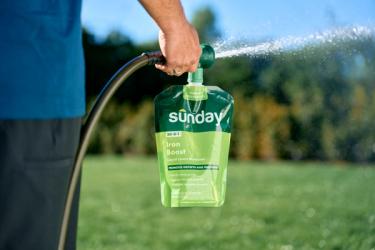
No. Our pouches are not currently recyclable.
Sunday pouches are made from post-consumer recycled plastic and use significantly less material than traditional rigid jugs, reducing shipping weight and carbon emissions. But the multi-layer construction that makes them lightweight also makes them non-recyclable at standard facilities.
For now, rinse with water, then dispose of the empty pouches in your regular trash. And know we're actively working on better solutions for the future.
Proper disposal and care for Sunday packaging
What should I do with my Sunday sprayer when it's empty?
Sprayers and wands are not recyclable. They're made from mixed plastics and mechanical components that recycling facilities can't process.
But don't throw them away after one use. Our hose-end sprayers and battery-powered wands are designed to work with refill pouches and concentrates. One sprayer can last multiple seasons with proper care.
How to maintain your sprayer:
- After each use, rinse with clean water.
- For wand sprayers, fill the pouch partially with water and spray for 30 seconds to flush the internal components. Store in a cool, dry place.
- When a sprayer finally wears out, dispose of it in regular trash.
How do I dispose of leftover Sunday weed killer or fertilizer?
If you have leftover product you can't use, don't pour it down the drain or into storm drains.
Liquid fertilizers and weed control: Apply any remaining product to your lawn or garden according to label directions. When finished, rinse with water three times in a non-lawn area (like the back corner of your yard), then dispose of it in the trash.
If you truly can't use it, contact your local waste management facility for guidance on disposing of household waste products.
Concentrates: Mix and apply according to directions, and try to use all the product in your yard. When finished, follow the same rinse and dispose method above.
For more detailed information on specific products, check our Safety Data Sheets page, or check with your municipality about proper disposal.
Can I reuse my Sunday sprayer with refill products?
Yes, and we encourage it!
Our hose-end sprayers and wand sprayers work with refill pouches and concentrates. Keep yours and buy refills instead of new starter kits. It's cheaper and creates less waste.
Bottles and pouches should not be reused for other purposes, as they may contain fertilizer or weed-control products. Dispose of pesticide products and fertilizer pouches in the trash bin, not in the recycling bin.
Our environmental commitment
We're a 1% for the Planet company, and sustainability is at the core of what we do. Since our founding in 2019, Sunday has donated over $2 million to help protect America's wild places, including 36,995 acres of American Tallgrass Prairie. Packaging is an area where we can do better, and we're working on it.
Learn more about our mission and the work we're doing to reduce our environmental impact. You can also read our latest Impact Report to see the full picture.