



New!
Try our complete pest solutions

Understanding ant control for your yard and home
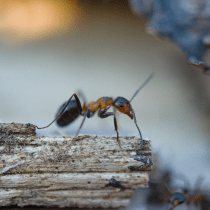
Ants are one of the most common pest problems homeowners deal with, and they rarely stick to just one area. You might spot a trail of ants on your patio, discover mounds popping up across the lawn, or find a line of tiny invaders heading straight for the kitchen. The challenge with ant control is that what you see on the surface is only a fraction of the colony. A single ant mound can house tens of thousands of ants, and the queen stays hidden underground producing more every day.
That's why effective ant killer strategies focus on reaching the colony, not just addressing the ants in plain sight. Outdoor ant control typically starts with granular bait that worker ants carry back to the nest, and indoor control layers in a spray for the ants that have already found their way inside. Choosing the right approach depends on the ant species you're dealing with, where they're showing up, and how widespread the problem is.
Choosing the right type of ant killer
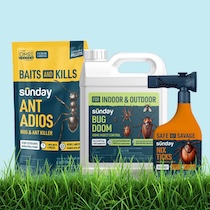
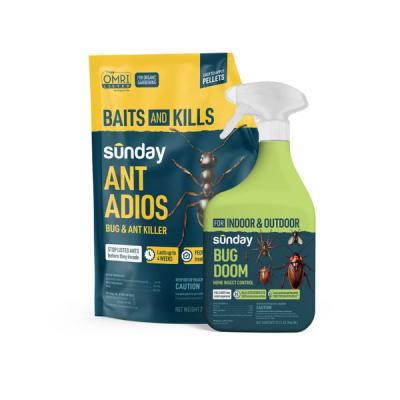
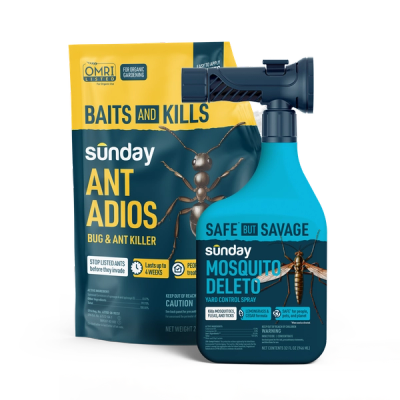
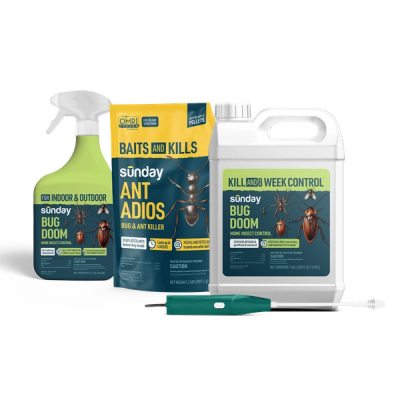
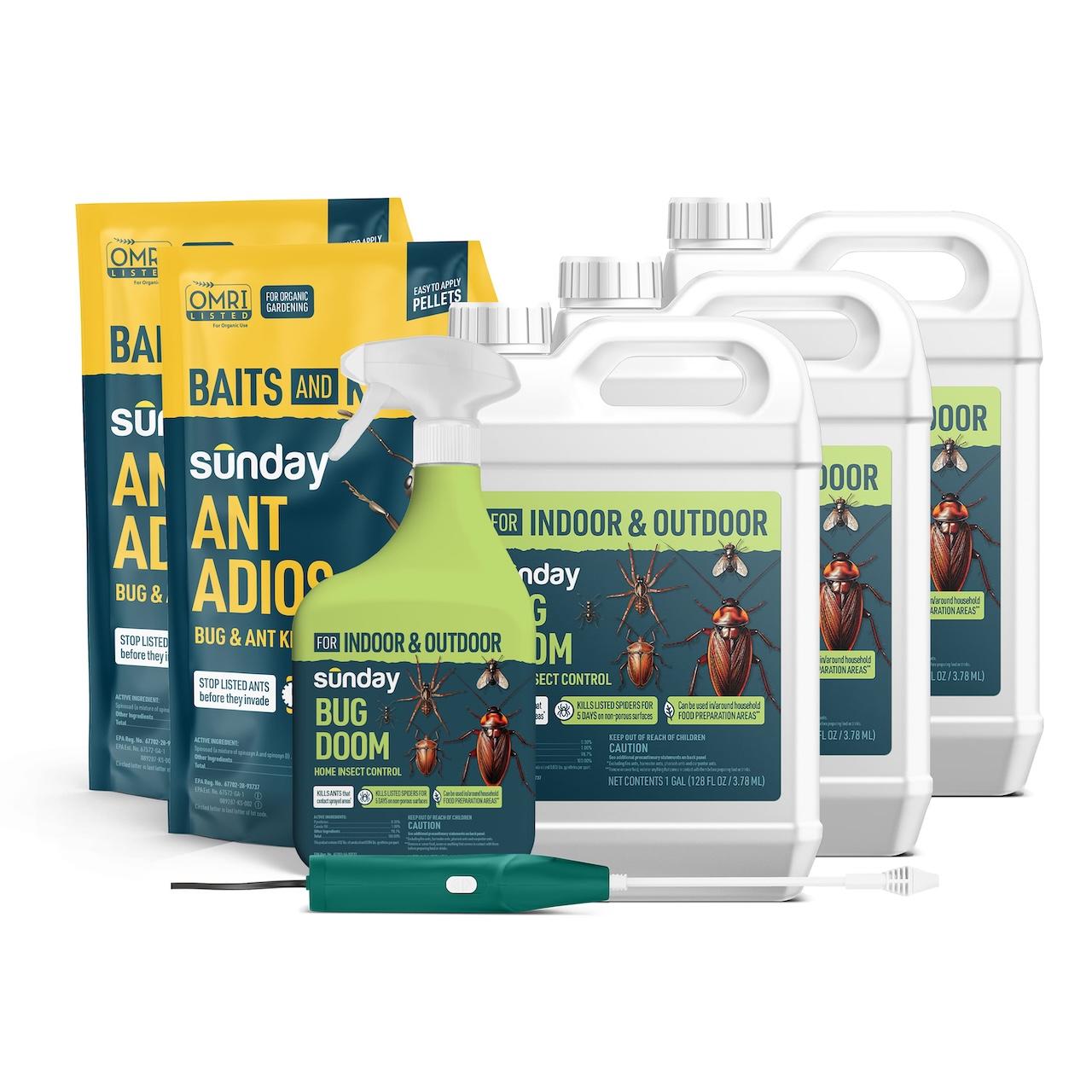
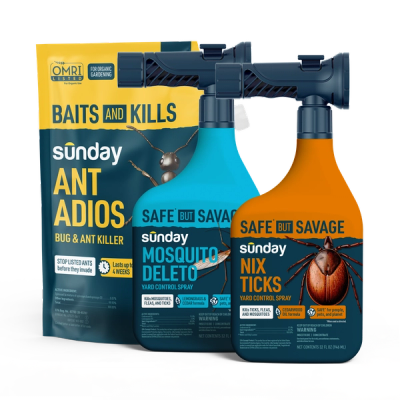
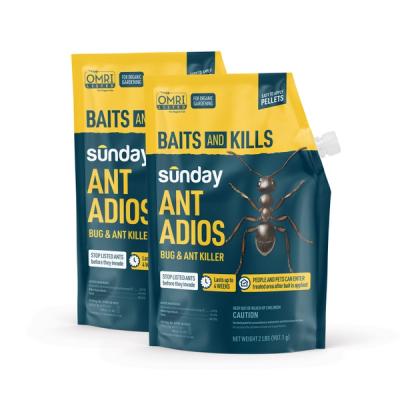
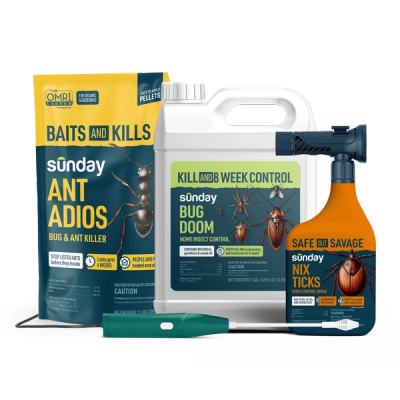
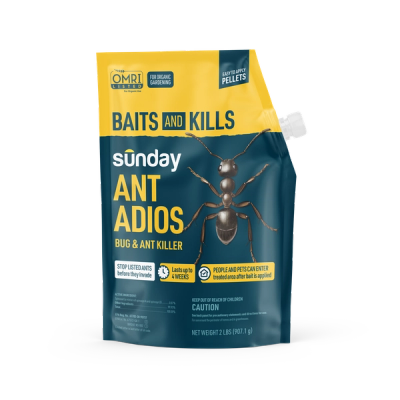
Granular ant bait for outdoor use. If your main issue is ants in the yard, around your home's foundation, or in garden beds, a granular bait is your go-to. Ant Adios Insect & Ant Killer uses spinosad as its active ingredient and is OMRI-listed for organic gardening. One 2 lb bag covers up to 4,000 sq ft, and you can apply it directly to mounds, around your home's perimeter, or broadcast it across the lawn. It controls foraging ants, sweet-feeding ants, pavement ants, Argentine ants, moisture ants, little black ants, and more, plus it handles earwigs, cutworms, sowbugs, and crickets.
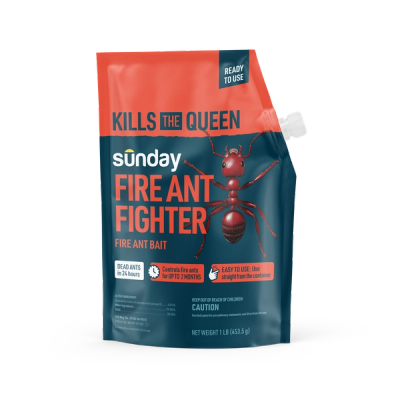
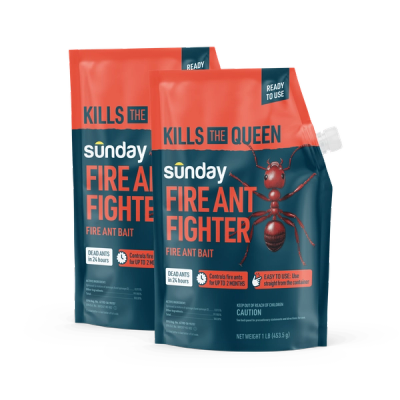
Fire ant bait for targeted mound treatment. Fire ants are a different challenge. General ant baits don't always cut it for these aggressive colonies. Sunday offers a dedicated fire ant bait built specifically for fire ant mounds, so you can target them directly without over-treating the rest of your yard.
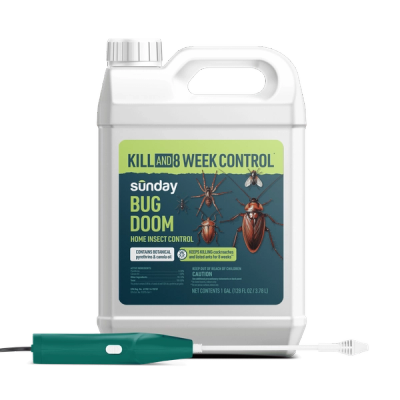
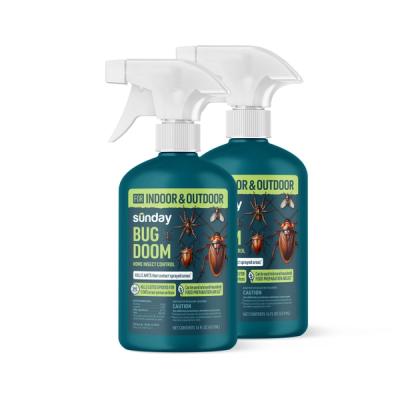
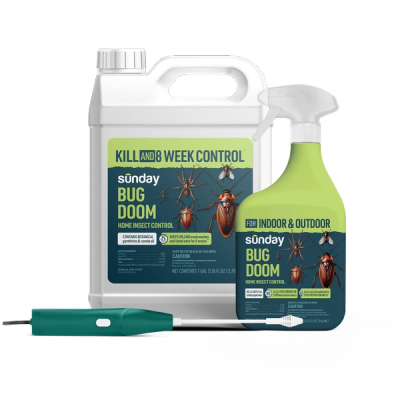
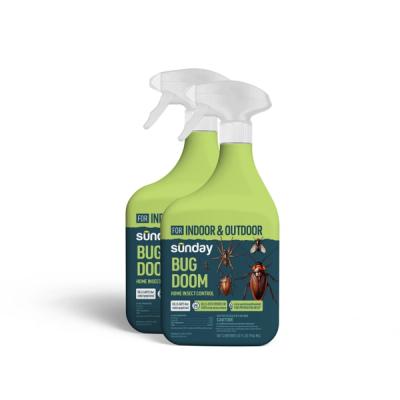
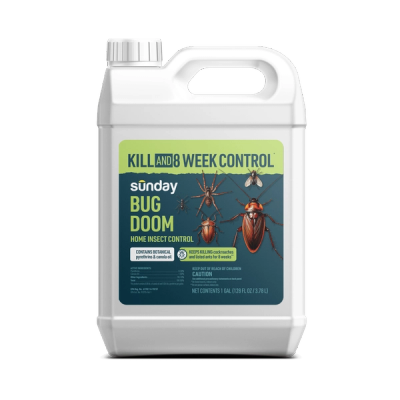
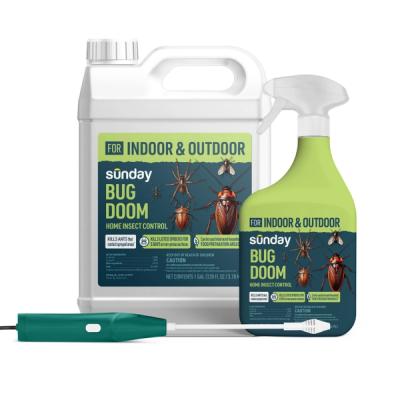
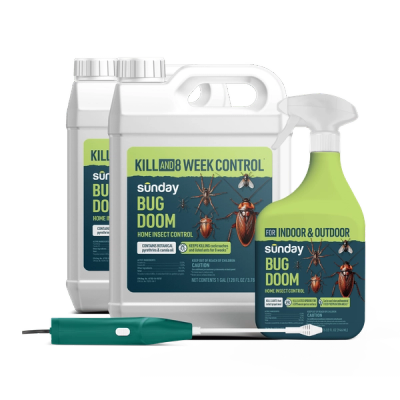
Indoor insect spray. For ants that have already made it inside, Bug Doom Indoor Insect Control Spray handles the problem at the point of entry. It's designed for indoor use in kitchens, bathrooms, and along baseboards.
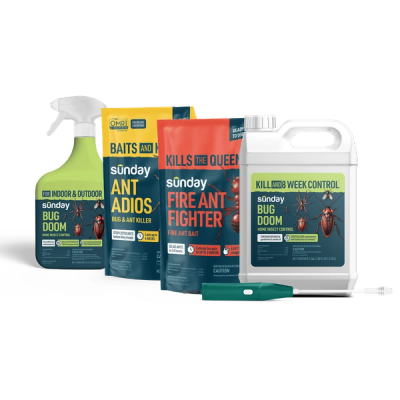
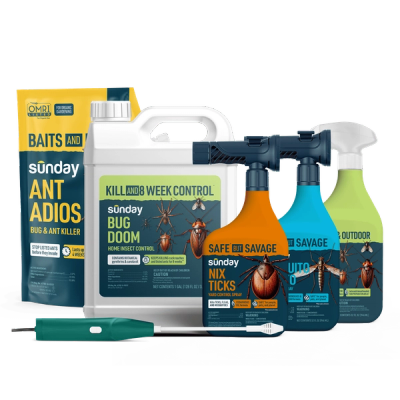
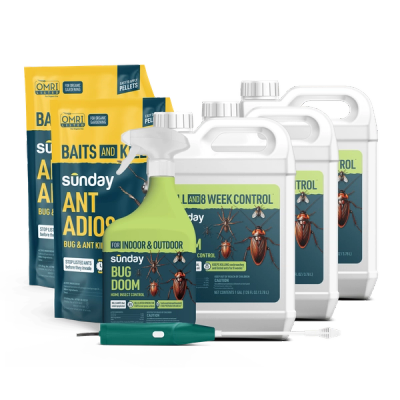
Combined indoor and outdoor kit. If ants are showing up both outside and inside your home, the Total Home Ant Control Kit pairs a granular outdoor bait with an indoor spray so you can address the whole problem in one purchase.
When to apply ant bait through the seasons
Spring (as soon as you see activity). Start applying granular bait when you notice the first mounds or ant trails. Getting ahead of colonies in early spring keeps populations manageable through the hotter months.
Summer (peak season). Ant activity hits its highest point in warm weather. Reapply every 2 to 4 weeks to maintain a barrier. Pay extra attention after rainstorms, which can displace bait and drive new mound activity.
Early fall (final push). A late-season application helps knock down colonies before they settle in for winter. Reducing the population now means fewer ants emerging next spring.
After rain. Granular bait can wash away in heavy downpours. If you've had significant rainfall, a fresh application restores your coverage.
Sunday's approach to ant control
Sunday's ant control products use bio-based, research-backed ingredients like spinosad, a soil-derived compound that targets insects while remaining OMRI-listed for organic gardening. Everything is designed to be straightforward to apply so you can handle ant problems yourself, without calling in a service or second-guessing what to buy.
Ant killer FAQs
What type of ant bait should I use for ants in my yard versus inside my home?
It depends on where the ants are setting up shop. For outdoor ant problems, granular baits work well because you can spread them around mound entrances, along your home's perimeter, or broadcast across the lawn. Foraging ants carry the bait back to the colony, which means you're targeting the source and not just the ones you can see. For indoor ants, a targeted spray gives you more control in tight spaces like kitchens, baseboards, and entry points. If you're dealing with ants in both places (and let's be honest, that's usually how it goes), a combined approach with a granular outdoor bait and an indoor spray covers all your bases.
How long does granular ant bait take to eliminate a colony?
Most granular ant baits work on a delayed timeline, and that's by design. Worker ants pick up the bait and bring it back to share with the colony, including the queen. With a spinosad-based granular bait, you can expect to see the colony decline within 3 to 14 days. The timeline depends on the size of the colony and ant species. Larger colonies with deeper networks may take closer to the full two weeks. The upside of that patience? You're eliminating the entire colony rather than just scattering the ants you can see on the surface.
Can I use the same ant killer for fire ants and common household ants?
Not always. Fire ants behave differently from common yard ants like pavement ants, Argentine ants, or little black ants, and they often need a bait formulated specifically for their mounds. A general granular ant bait is great for most foraging ant species, but fire ant mounds call for a dedicated product designed to target those colonies. Check the label to see which ant species are covered before you apply.
When is the best time of year to apply ant bait for long-term control?
Spring is the ideal window. Ant colonies ramp up activity as soil temperatures rise, and getting bait down early interrupts their expansion before populations peak in summer. For ongoing control, plan to reapply every 2 to 4 weeks throughout the active season (typically spring through early fall). If you notice fresh mound activity after heavy rain, that's a good signal to reapply since rain can wash granular bait from treated areas. A fall application can also help reduce overwintering populations so you're starting with fewer ants the following year.
What is the difference between an ant bait and an ant spray?
Ant baits and sprays solve different parts of the problem. Baits are designed to be carried back to the colony by worker ants. The delayed action means the bait gets shared with the queen and other ants underground, which can eliminate the whole colony over time. Sprays deliver more immediate, contact-level control, making them a better fit for indoor situations where you want ants gone on the spot. For full coverage, a lot of homeowners use both: bait outside to address the colony, spray inside to handle any ants that have already made it through the door.
You may also need
Ant problems don't always travel alone. Here are a few related categories worth checking out.
- Pest Control Kits for bundled solutions that cover multiple pest types at once
- Mosquito Spray to keep your outdoor spaces comfortable all season
- Tick Spray for yards where ticks are a concern, especially near wooded areas
- Lawn Care to build a thicker, healthier lawn that's more resilient overall