






The Sunday difference

Grow a greener lawn
Get pesticide-free fertilizers
Made for people, pets & planet


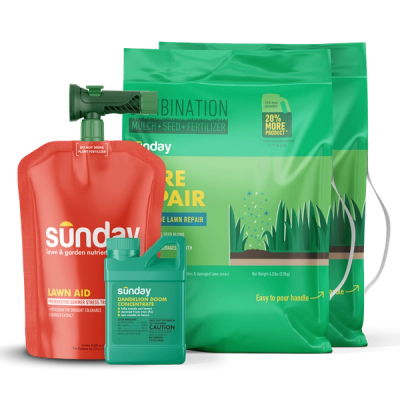
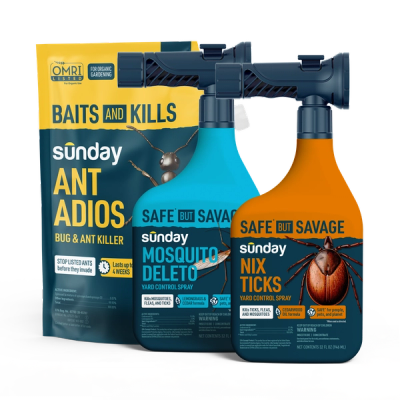
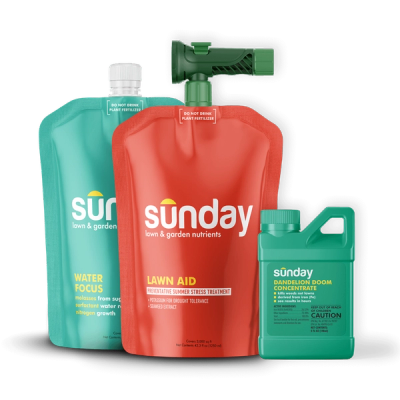
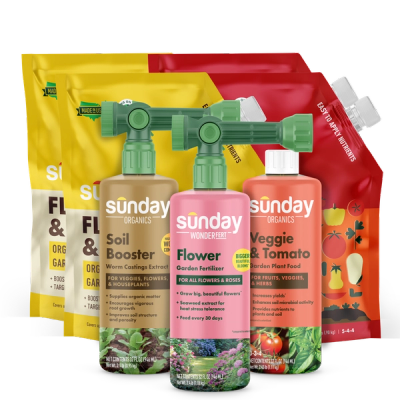
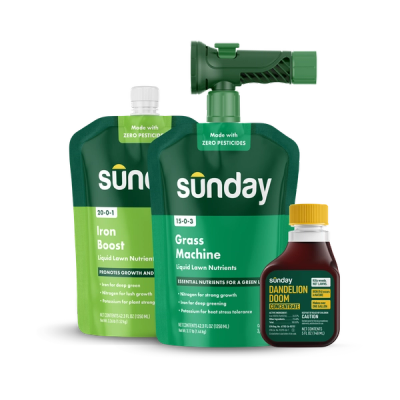
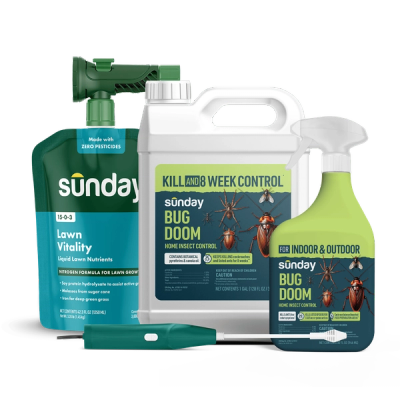
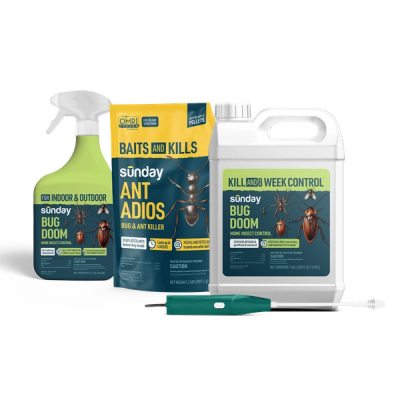
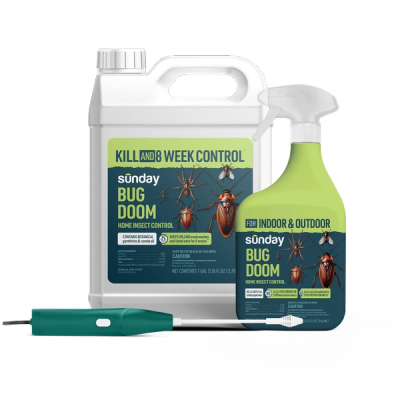
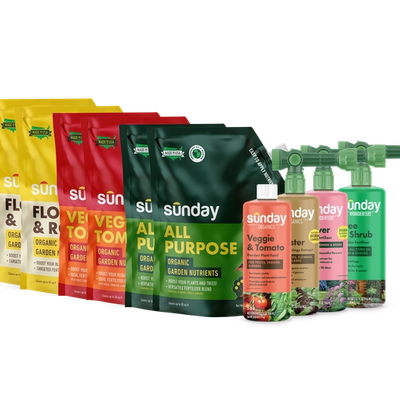
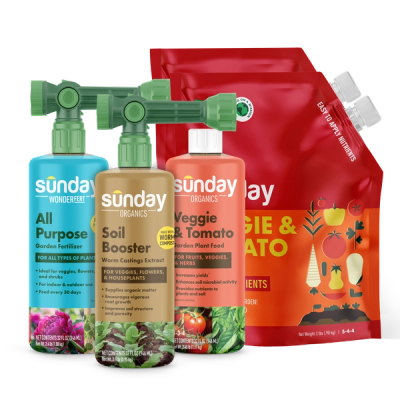
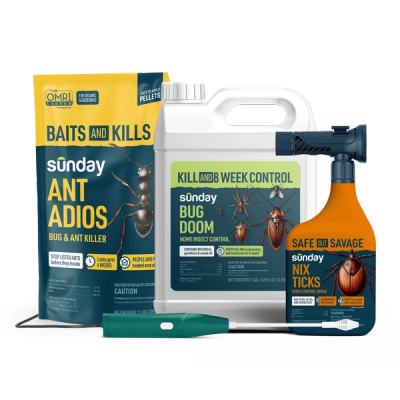
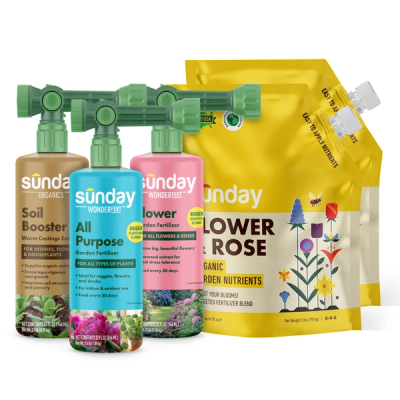
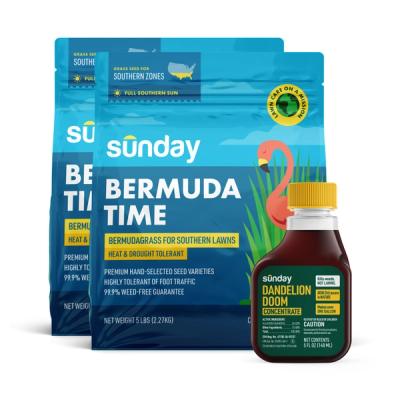

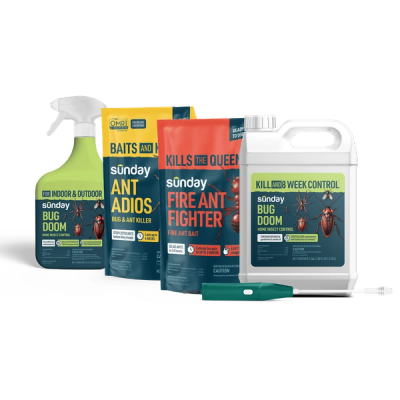
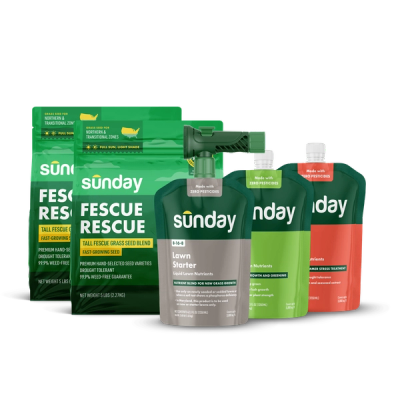
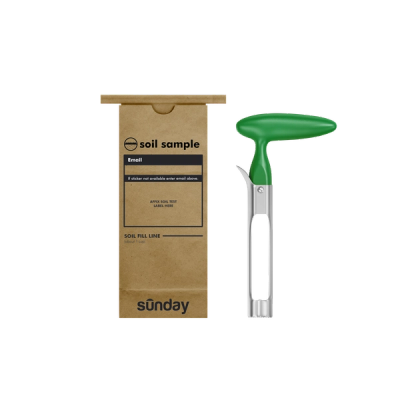
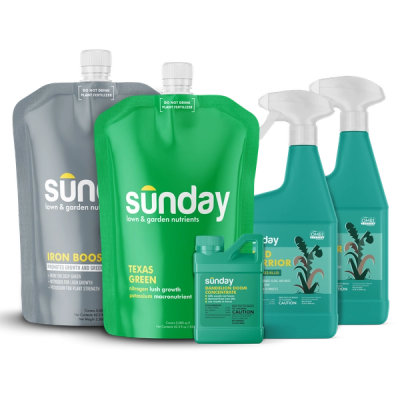
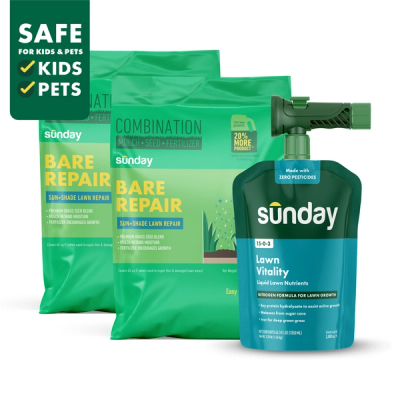
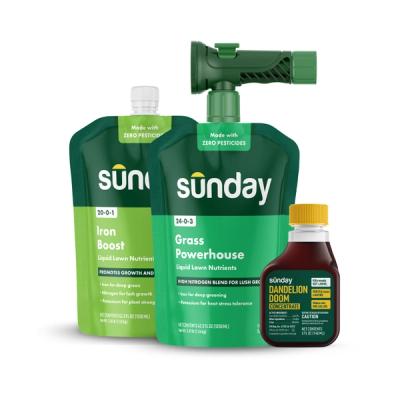
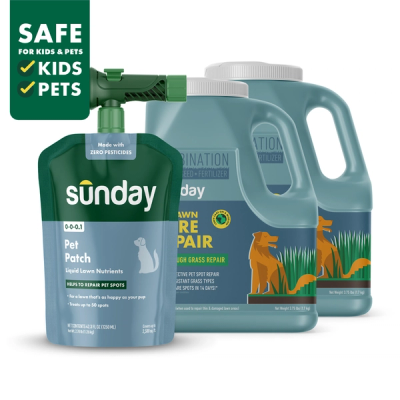
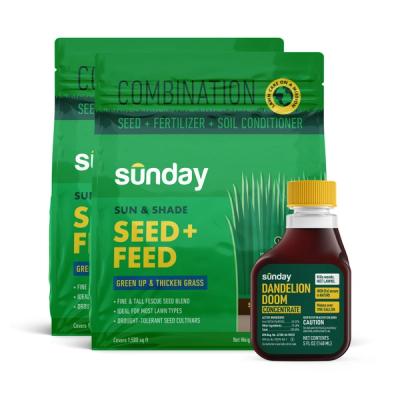

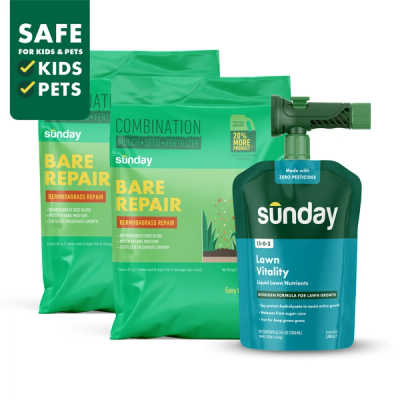
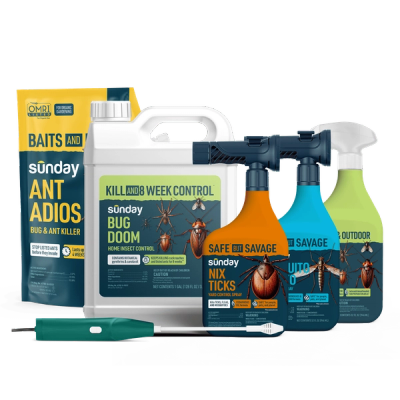
Custom yard kits
Not sure what your lawn needs this season? We bundled it for you.
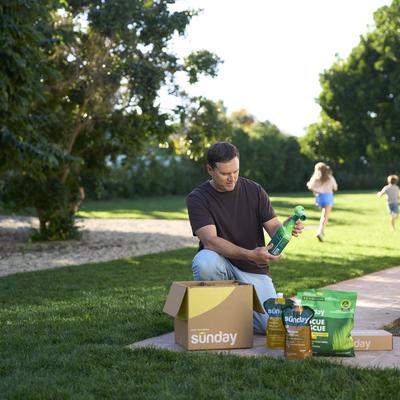
Every Sunday kit pairs pesticide-free nutrients with the sprayer to apply them, so you skip the guesswork and get outside. Scroll on to find the kit that fits your season and the one problem you want to fix first.
What to know before buying a DIY lawn care kit
If you're here, you're probably tired of guessing what your lawn actually needs. A DIY lawn care kit solves that by putting the essentials in one box.
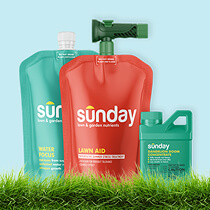
Most kits include liquid nutrients and a hose-end sprayer that hooks to your garden hose. Depending on the season, a kit may add seed or weed control, and the summer kit adds a heat stress treatment.
What makes a kit worth buying comes down to what's inside. Look for ingredients you recognize: soy protein, iron, seaweed, molasses, humic acid. These feed the living soil under your grass, so you build long-term health instead of a quick green-up that fades in two weeks.
What's not inside matters just as much. Sunday fertilizers are 100% pesticide-free. Always.
One quick step before you buy: test your soil. A Sunday Soil Test Kit & Analysis shows exactly what your lawn is low on. That way you pick the kit that fills the gap, not the one that looks good on the box. Results land in about 1 to 2 weeks after your sample reaches the lab.
How to choose the right DIY lawn care kit for your yard
Not every lawn needs the same thing at the same time. Start with the season you're in, then narrow by your biggest headache.
Pick by season:
- Spring Starter Kit or Spring Kickstart Kit: Two liquid feedings plus Dandelion Doom for the weeds that show up with warm weather. Apply the first pouch when soil temperatures hold at 50 to 55°F for 3 to 5 days and grass is actively growing. Spring Kickstart pairs Iron Boost and Grass Machine for a deeper green-up in the first 7 to 10 days.
- Cool-season Weed, Seed & Feed Kit: Bare Repair Sun + Shade seed, Lawn Aid, and Dandelion Doom in one box. Built for cool-season yards like fescue and bluegrass. Seed when daytime temperatures sit between 55 and 75°F.
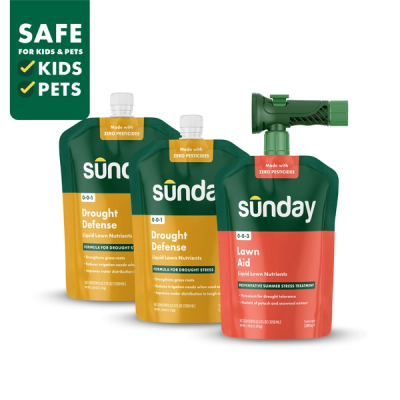
- Summer Heat & Drought Defense Kit: Lawn Aid (0-0-3) reduces wilting and dry patches. Drought Defense (0-0-1) uses a surfactant to help soil hold moisture. Each pouch covers up to 5,000 sq. ft. Apply in late spring, before the first heat wave, not after your lawn is already brown.
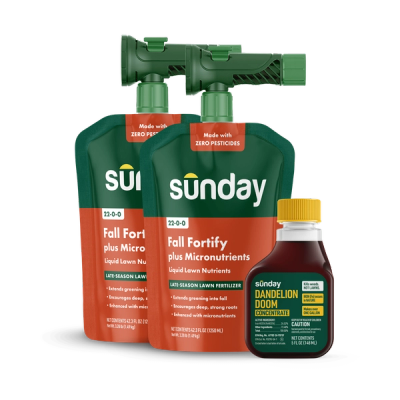
- Fall to Winter Ready Lawn Kit: Fall Fortify Plus micronutrients to build roots and store energy before the ground freezes. Dandelion Doom handles perennial weeds while they're at their weakest. Feed cool-season lawns from late August to mid-October. Feed warm-season lawns from mid-August to late September.
Pick by problem:
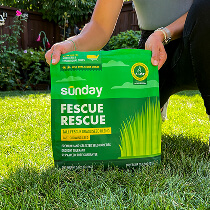
- Thin or bare spots: The Fescue Grass Patch Kit or Bermudagrass Patch Kit combines Bare Repair seed with Lawn Vitality. Water new seed lightly 1 to 2 times a day until it germinates, usually 7 to 21 days.
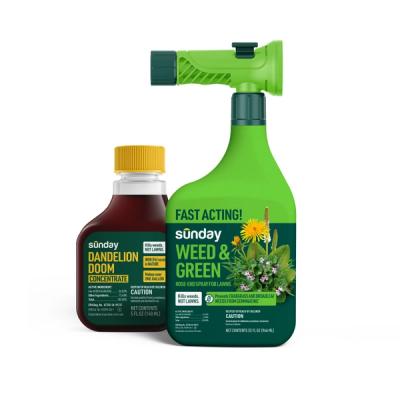
- Too many weeds: A thick lawn crowds out most weeds on its own, so feed and overseed first and hand-pull what you can, roots and all. For what's left, the Pre-emergent & Post-emergent Weed Kit pairs Weed & Green with Dandelion Doom. Apply Weed & Green as a pre-emergent once daily average temperatures hold above 50 to 55°F for 3 to 5 days, then reapply 3 to 6 weeks later up to 2 times. Use Dandelion Doom to spot-treat what breaks through.
- Dog damage: The Pet Patch Kit includes Pet Patch, which washes urine contaminants out of the soil, and Pet Lawn Bare Repair, a urine-resistant seed blend. Treat the spot, water in, let it dry completely, then clear dead grass and seed. For bigger pet yards, browse our pet products.
- Starting from bare dirt: The Start Your Lawn from Scratch Kit bundles seed and the nutrients to establish it. Keep soil consistently moist until the grass reaches 3 inches, then shift to deep, infrequent watering.
- Warm-season grass: Bermudagrass Seed & Weed Lawn Kit and Texas Green Lawn Kit are built for bermuda and zoysia yards. St. Augustine too. Seed warm-season lawns when temperatures run 70 to 90°F, late spring through summer. Our Warm-Season Lawn Care Guide walks through the full calendar.
Bugs, not grass, your biggest issue? Head to our pest control kits. Feeding flower beds or tomatoes? Our garden kits cover those.
First yard ever? Start with Lawn Care for Beginners and come back here when you know your grass type.
When and how to use your DIY lawn care kit
Timing matters more than most people think. Apply the right kit at the wrong time and you've wasted a Saturday.
Season by season:
- Early spring (March to April): Apply pre-emergent before soil temperatures hit 55°F consistently. Forsythia blooming is your cue. Send in your soil test now so results arrive before your first feeding.
- Mid to late spring (April to June): First feeding when soil holds 50°F and grass is growing. Sunday nutrients work best between 50 and 85°F for cool-season lawns and 65 to 90°F for warm-season lawns. Spot-treat weeds 24 to 48 hours after feeding.
- Summer (July to August): Switch to stress prevention. Raise your mower to 3 to 4 inches. Water 1 to 1.5 inches per week, including rain, in 2 to 3 deep sessions before 10 a.m. Cut back on heavy feeding during peak heat. If water is limited, it's fine to let a cool-season lawn go dormant. It'll green back up when cooler weather and rain return.
- Fall (September to November): The best window for overseeding cool-season lawns is late August to early October. Feed roots heading into dormancy. Drop your final mow to 2 to 3 inches to limit snow mold.
- Year round: Mow high and leave clippings on the lawn. They break down and return nitrogen to the soil for free.
For the full month-by-month version, see our Ultimate Lawn Care Calendar.
Apply in this order:
- Feed first. Nutrients go down before anything else.
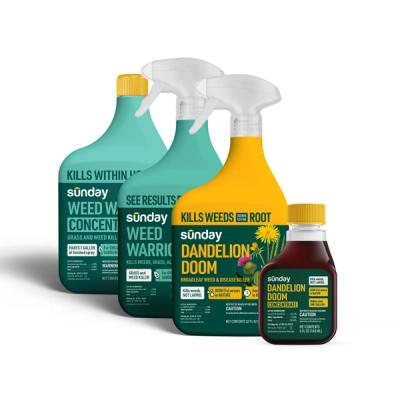
- Weed second. Wait 24 to 48 hours after feeding. Dandelion Doom works best between 50 and 85°F. Weed Warrior works below 95°F.
- Seed third. Wait 1 day after Dandelion Doom or Weed & Green. Wait 5 days after Weed Warrior.
- Pests last. Apply to a dry lawn, 24 hours after any liquid product.
After you apply:
- Wait 24 hours after feeding, then water deeply.
- Don't water for 24 hours after weed control. Rain within 6 hours can wash it off, so pick a dry day.
- Give every product 24 to 48 hours before you mow.
- New seed is the exception. It needs light water 1 to 2 times daily until it sprouts.
Watering well is half the job. If you're not sure how much your sprinklers actually put down, run a quick irrigation audit with a few tuna cans and a 20-minute timer.
Why Sunday takes a different approach to the DIY lawn care kit
Most lawn care kits hand you a one-size-fits-most box and wish you luck. We start with data.
Every Sunday formula is built on more than 4.1 million lawn analyses and Minimum Levels of Sustainable Nutrition (MLSN) guidelines. That lets us limit nitrogen to exactly what grass needs. Roots grow deeper instead of pushing top growth you have to mow every four days.
Here's what's in our pouches: soy protein for slow, steady nitrogen. Iron for deep color without extra growth. Seaweed and kelp for heat tolerance and stronger cell walls. Molasses and humic acid to feed the microbes that make nutrients available to your grass.
Here's what we won't use (ever): pesticides in our fertilizers. Glyphosate in anything.
Why we care about that: in 2018, Cornell University tested homes and found common lawn herbicides and pesticides inside every single one. Lawn choices are home choices.
The result is a yard that gets healthier each season instead of needing the same quick fix on repeat. A kit is a great place to start. When you're ready for the whole season sequenced to your soil test and your local weather, that's the Sunday Custom Lawn Plan.
Common questions about DIY lawn care kits
What is typically included in a DIY lawn care kit?
Most kits come with 2 to 3 liquid nutrient pouches and a reusable hose-end sprayer. Seasonal kits add weed control or seed, and the summer kit adds a heat stress treatment. Each pouch typically covers up to 5,000 sq. ft., so check your lawn size before you buy.
How do I choose the right lawn care kit for my yard size and grass type?
Start with a soil test so you know what your lawn actually needs. Then match the kit to your grass type. Cool-season grasses like fescue and bluegrass respond best to feeding in spring and fall, with fall overseeding from late August to early October. Warm-season grasses like bermuda and zoysia want late spring and summer feeding, when temperatures run 65 to 90°F.
What is the difference between a seasonal lawn care kit and a starter kit?
Seasonal kits target one window: heat protection in summer or root building in fall. A starter kit bundles what you need to grow grass from bare soil, including seed and the nutrients to establish it. If you're patching a few spots, a patch kit is the better fit than a full starter kit.
Can I combine a lawn care kit with a custom lawn plan?
Yes. Kits work as add-ons to a custom lawn plan. Your plan uses your soil results and local climate data to send the right products throughout the season. A kit lets you layer in extra help for one goal, like overseeding or a stubborn weed patch.
When is the best time of year to start using a lawn care kit?
Spring is an easy entry point, right when soil temperatures hit 50 to 55°F. But fall is the most important season for cool-season lawns. Warm soil and cool air push grass to build roots and store energy, so feeding and seeding from late August to mid-October pays off the following spring. Cover both seasons and you'll see the difference within a year.
Products that pair well with your DIY lawn care kit
A kit covers the essentials. Sometimes your lawn needs a little extra between applications.
- Lawn fertilizer: Targeted feeding if your soil test shows a specific gap, like low potassium before summer heat.
- Grass seed: Thicken thin areas with a fall overseed. A dense lawn is your best weed defense, so this is where to invest first.
- Weed control: Hand-pull what you can, roots and all. Spot-treat the stubborn ones that come back. The goal is weeds at a level you can live with, not a lawn sprayed edge to edge.
- Irrigation tools: Every product works better on a lawn getting 1 to 1.5 inches of water a week in 2 to 3 deep sessions.
Want the whole season handled? Build a custom lawn plan and we'll sequence exactly what your yard needs, when it needs it.
Questions about which kit fits your yard? Our Yard Advisors are happy to help.