




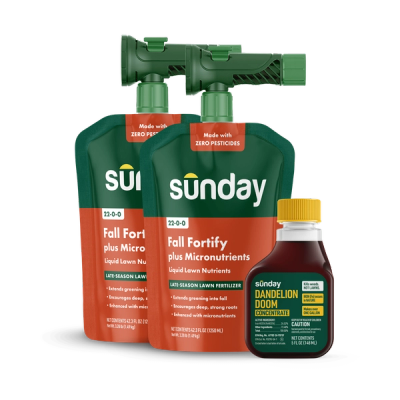
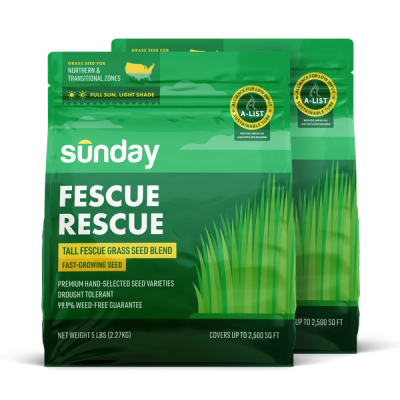
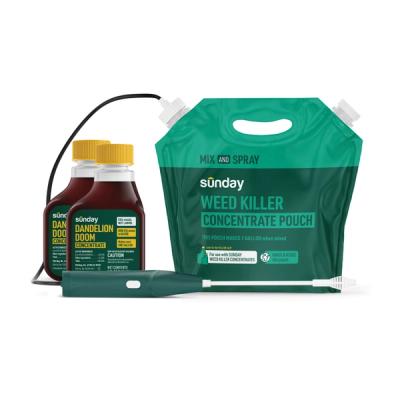
Buy 2, Save 10%
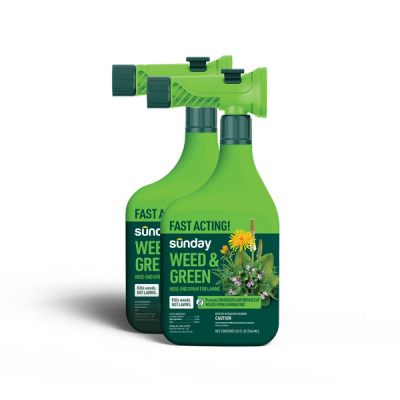
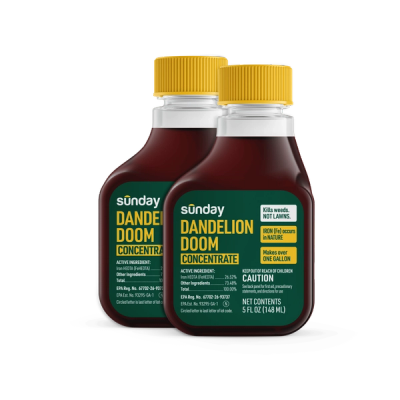
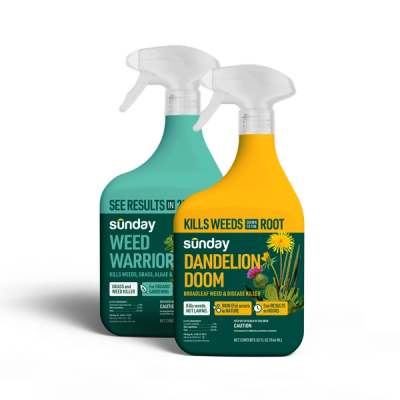
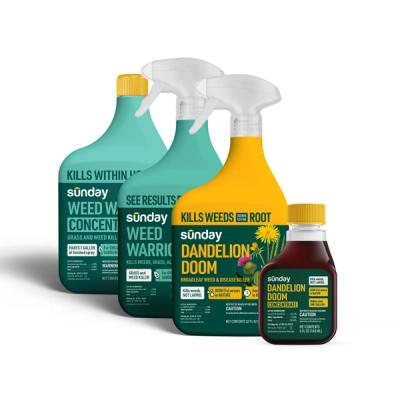
Weed & Green Pre-emergent and Post-Emergent Weed Killer (2-Pack)
$45 $50

Free Shipping!
The Sunday difference

Grow a greener lawn
Get pesticide-free fertilizers
Made for people, pets & planet


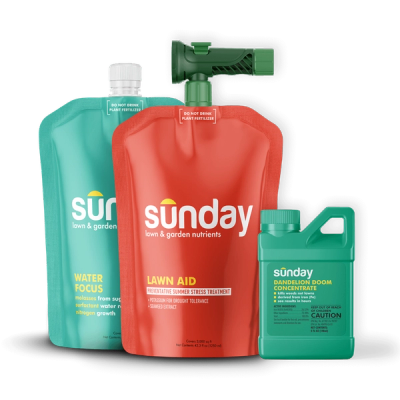
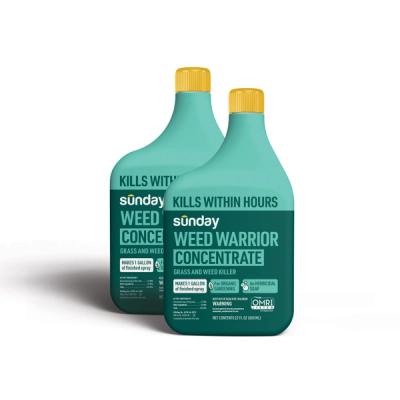
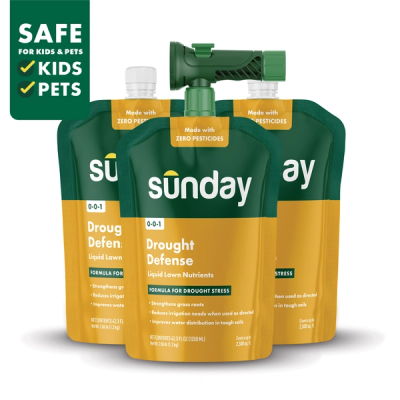
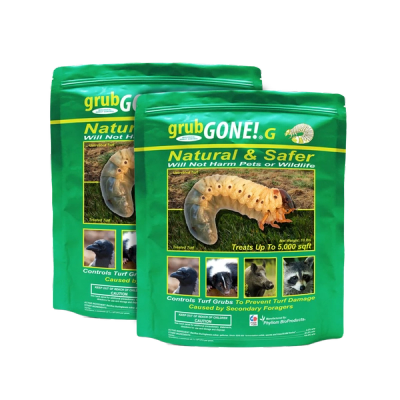

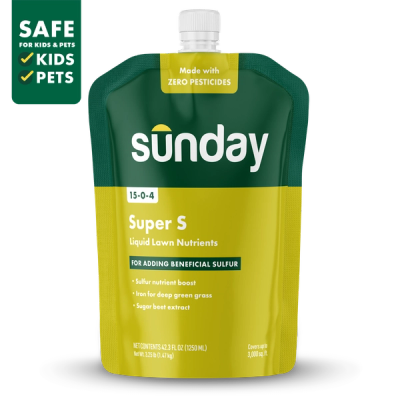
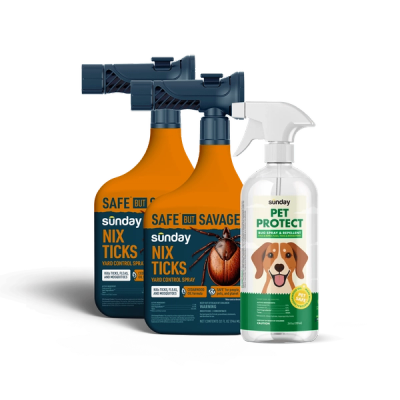

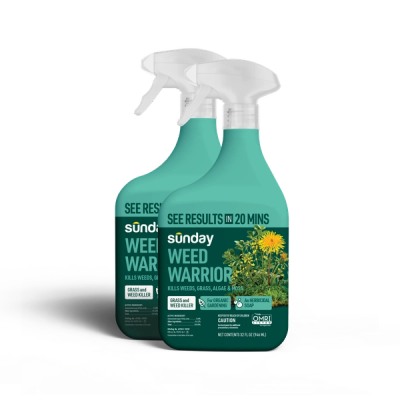
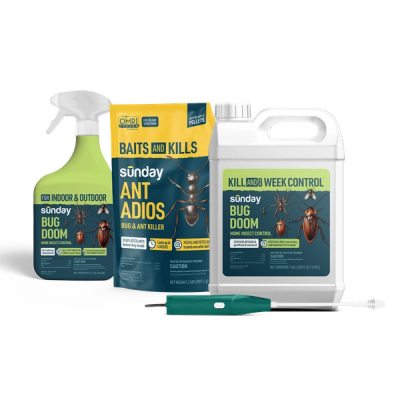
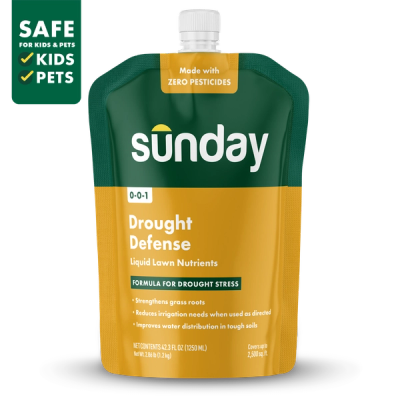
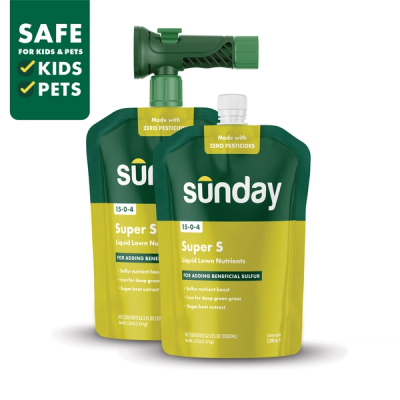
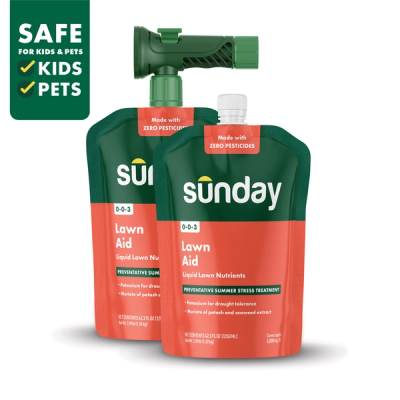
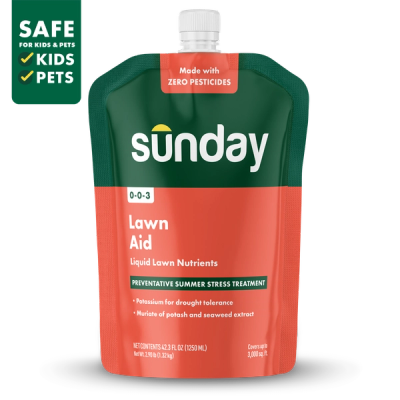
Lawn care
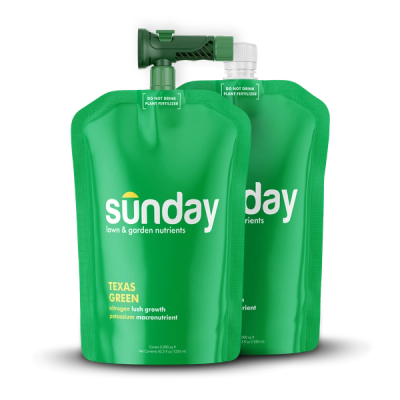
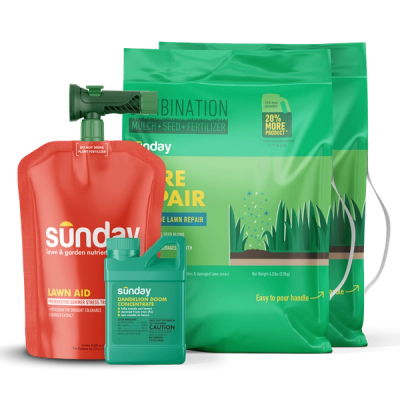
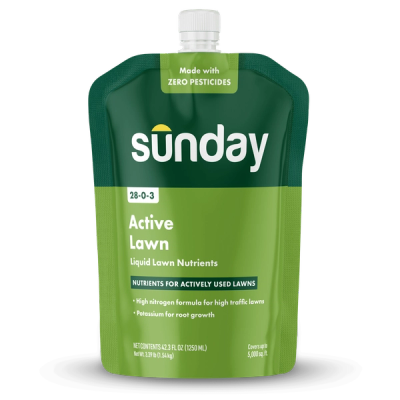
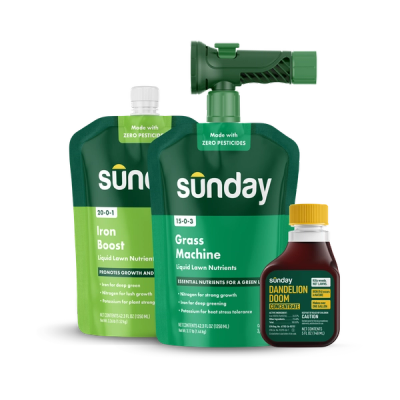
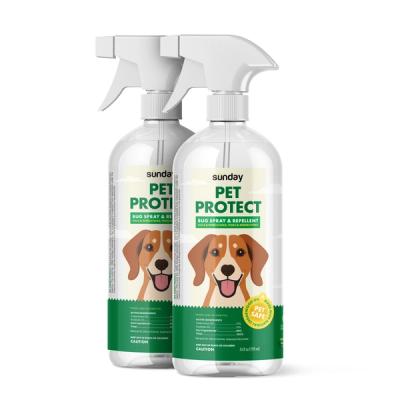
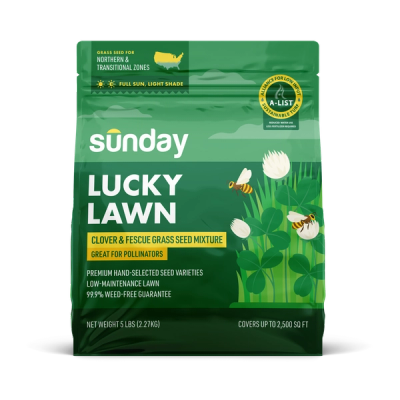
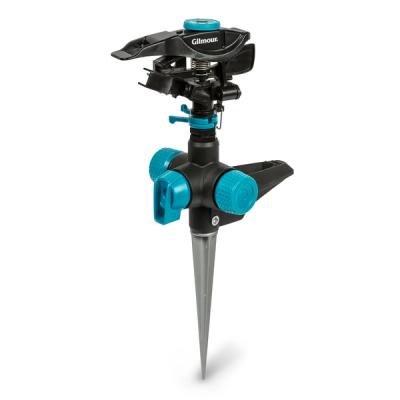
Everything your yard needs in one place: fertilizer, grass seed, weed control, pest control, pet lawn repair, and the tools to apply them.
Not sure where to start? Enter your ZIP code and we'll build a custom lawn plan around your soil and local climate. Scroll on to see how to pick the right products yourself.
What to look for in lawn care products
Your lawn tells you what it needs. Thin patches and dull color often signal hungry grass. If weeds are moving in, your grass is probably too thin to crowd them out.
The right products fix those problems at the root. Literally.
Here's what the core ingredients do:
- Nitrogen drives healthy growth and blade density. No nitrogen, no growth.
- Potassium strengthens roots and helps improve cellular turgor, helping grass bounce back from heat, cold, drought, and foot traffic.
- Iron deepens color without forcing excess growth, and supports photosynthesis.
- Seaweed, humic acid, molasses, and soy protein help turn the soil nutrients into food your grass can actually use by boosting soil microbes and nutrient availability.
What about phosphorous? While this nutrient is vital for the lawn, most Sunday fertilizers skip phosphorous. Most lawn soils have plenty, and runoff of this nutrient can harm waterways and the ecosystem as a whole. Starting with a soil test will confirm if your lawn needs this ingredient. If your soil has plenty, you can skip this nutrient and your lawn will still thrive.
Before you buy anything, test your soil. A soil test shows what's missing so you feed what your lawn needs and skip what it doesn't. New to all of this? Our lawn care basics guide covers the fundamentals in about 10 minutes.
Types of lawn care products and how to choose
Each product does a different job. Here's how to match them to your yard.
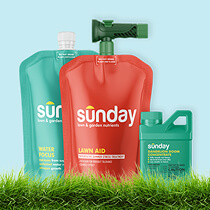
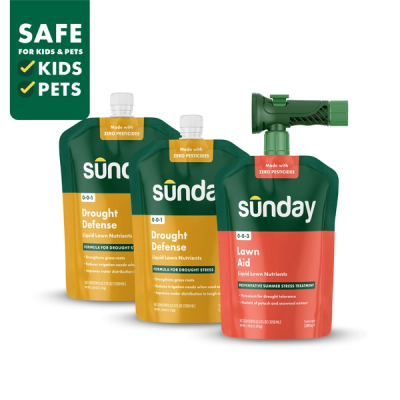
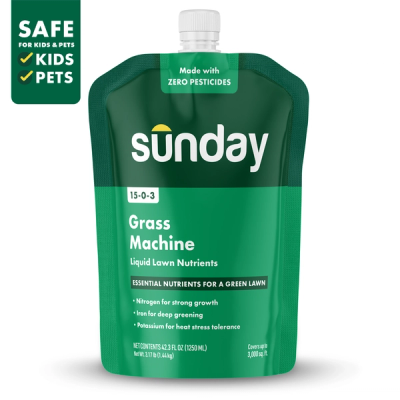
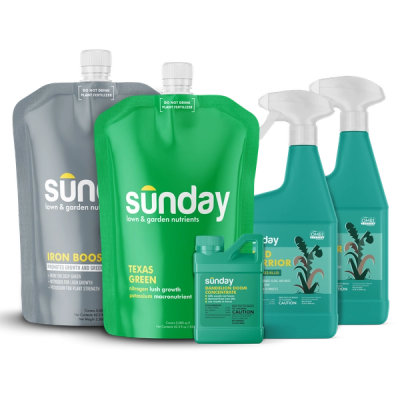
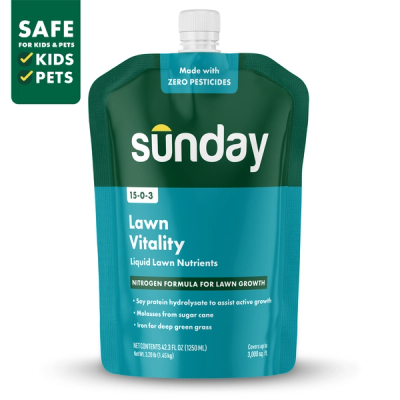
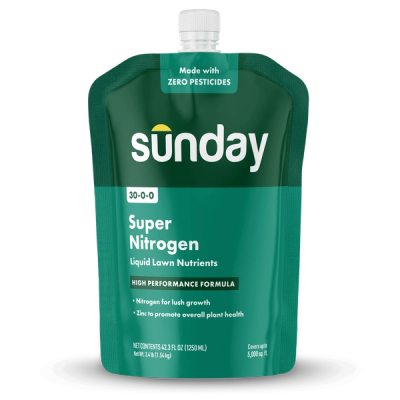
- Liquid fertilizers hook up to your hose and absorb fast through blades and soil. They're formulated with quicker-release nitrogen, potassium, and seaweed extract for greening you'll see within 1 to 2 weeks. Our liquid pouches cover up to 5,000 square feet per pouch. Iron Boost Liquid Fertilizer is a good example and a great spring fertilizer: it deepens color and encourages steady, balanced growth.
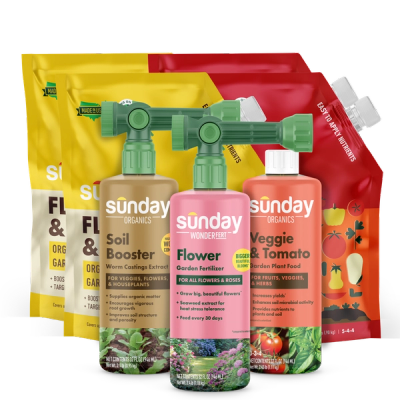
- Granular fertilizers are applied with spreader and provide slow-release nitrogen that feeds the lawn over several weeks. They're blended with kelp, wood ash, and compost to build soil over time. If your lawn is bigger than 13,500 square feet, granular fertilizer is a more practical application method. Because of the slow, steady release of nutrients, you only need to apply 1 to 2 times per year. Browse granular options in lawn fertilizer.
- If your soil needs Phosphorous Lawn Starter Liquid Fertilizer supports root development and recovery in established grass, and gives new seed and sod the nutrients they need to build strong roots during the establishment period.
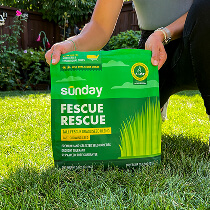
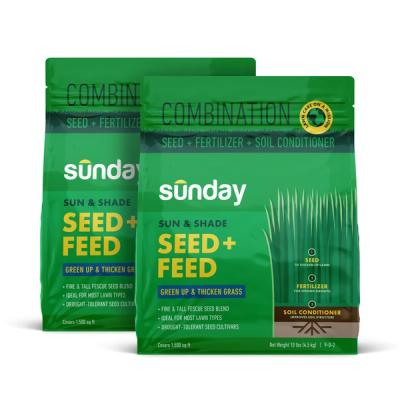
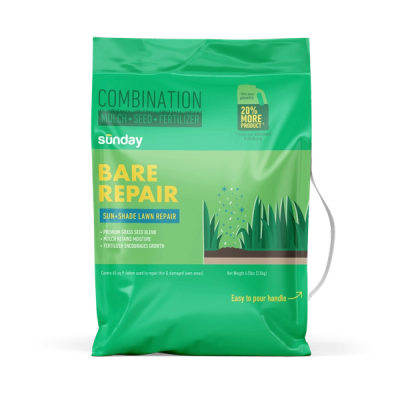
- Grass seed fills out bare spots or thin areas of the lawn. Every Sunday blend uses A-LIST approved seed varieties tested for deeper roots and lower water, nutrient, and pesticide needs. These grasses can do more with less. Our blends also come with an 85% germination rate and a 99.9% weed-free guarantee. Tall Fescue and Kentucky Bluegrass support northern yards, while Bermudagrass fits the South. Fine Fescue, and Microclover blends work great for shade. Find the best blend for you in grass seed.
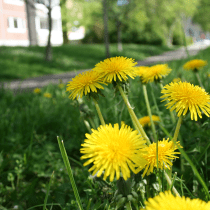
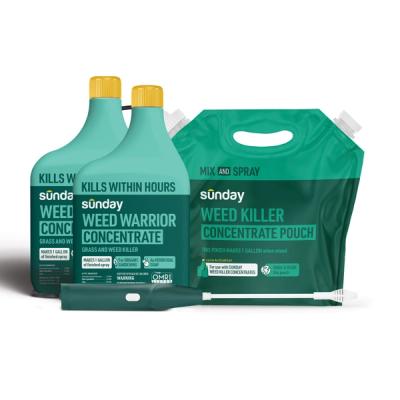
- Weed control treatments back up your best defense which is a healthy lawn. Pre-emergent weed control stops seeds before they start, where post-emergent control targets weeds already growing. Selective options like Dandelion Doom target specific types of weeds without harming the grass, where non-selective herbicides like Weed Warrior can be used to control grass and weeds in various areas of the yard. Compare all options in weed killer.
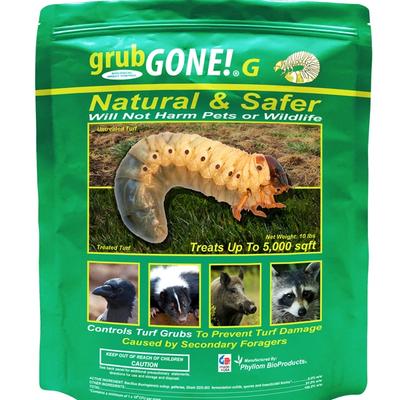
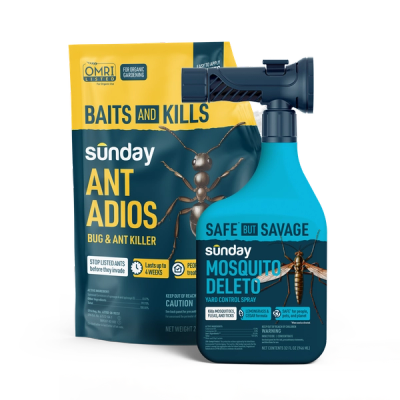
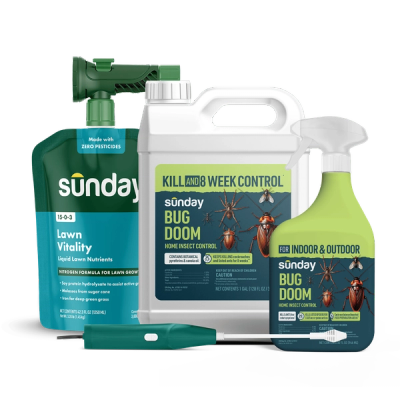
- Lawn pest control protects your lawn from grubs and nuisance pests like ants. The most effective pest control starts by identifying the pest and removing what attracts it. Biological grub control targets grubs without disrupting the rest of your yard. Many ants are good for your soil ecosystem, so leave them alone unless they’re taking over. Fire ant mounds are the exception: put Fire Ant Fighter Ant Bait directly on active mounds. See the full lineup in lawn pest control. (These products will not be included in your subscription)
- Pet lawn products repair and reduce yellow spots and bare patches from dogs. Pet Lawn Grass Seed is a urine-resistant blend built for high-traffic pet yards. Explore spot treatments and repair kits in pet products.
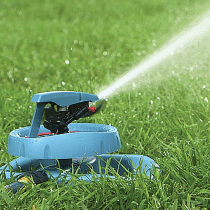
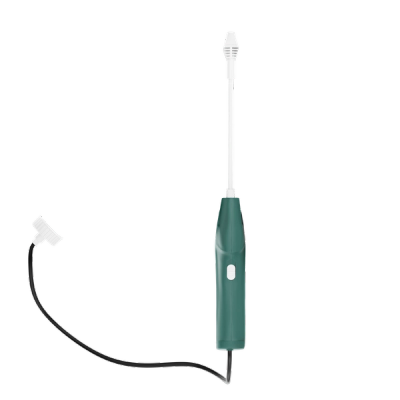
- Watering tools take watering from guess work to a seamless system. A reliable sprinkler and a rain gauge lets you water to encourage deep roots, and a lawn that is more resilient to drought and heat. Find them in irrigation tools.
- Kits bundle products around one goal or season so you don't have to piece things together. Need a solution for spring fertilizers, starting your lawn from scratch, or controlling pests in your home and yard? We have a custom lawn kit for that.
When to apply lawn care products throughout the year
Even the best products won't do much at the wrong time. Here's the calendar:
- Early spring (March to April): Apply pre-emergent around when soil temps hit 55°F consistently. That's the window before crabgrass germinates. Get your soil test done now so you know what to feed. Spring feeding should lean on iron and nitrogen to speed green-up.
- Late spring (May to June): Start your fertilizer routine once grass is actively growing. Hand-pull weeds that broke through, then spot-treat the stubborn ones when temps are between 50 and 85°F. Warm-season lawns seed best now through summer.
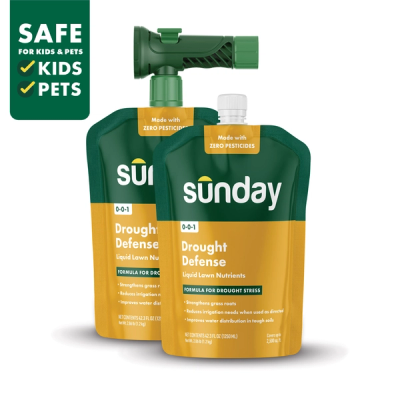
- Summer (July to August): Shift to stress prevention. Seaweed-based heat and drought treatments help grass hold moisture. Water deeply 2 to 3 times per week instead of a little every day, and mow at the highest height for your grass type. Cut back on heavy nitrogen during peak heat. In a real drought, it's fine to let grass go dormant. It'll recover when rain returns.
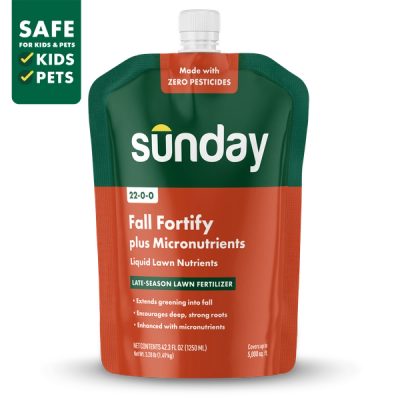
- Fall (September to November): The most important season for cool-season lawns. Overseed thin areas and patch bare spots while soil is still warm. Fertilize between late August and mid-October with a nitrogen and iron formula (Fall Fortify Plus is 22-0-0) to build roots, not blades. Perennial weeds like dandelions are pulling energy into their roots now, so fall treatments hit harder.
- Winter (December to February): Stay off frozen grass and manage salt near walkways. Warm-season lawns can take a light potassium application to keep roots strong. Cool-season lawns that missed fall seeding can frost seed before the ground freezes solid.
Two more tips. Water lightly after granular applications, and apply liquids on a calm, dry morning. Missed a fertilizer window? Apply it when you realize it, then catch up by making applications as quickly as 14-21 days later, until you are back on track.
Sunday's approach to lawn care products
We build everything around one idea: healthy soil grows a healthy lawn.
Our fertilizers are pesticide-free. They're made with ingredients we're happy to name, like soy protein, iron, seaweed, molasses, humic acid, and slow-release nitrogen. Those ingredients feed the biology in your soil, and that biology feeds your grass.
We're just as clear about what we leave out. We never use glyphosate, and we never will. Cornell University tested homes and found common lawn herbicides and pesticides inside every single one. Lawn choices are home choices, so we'd rather you know exactly what's in the pouch.
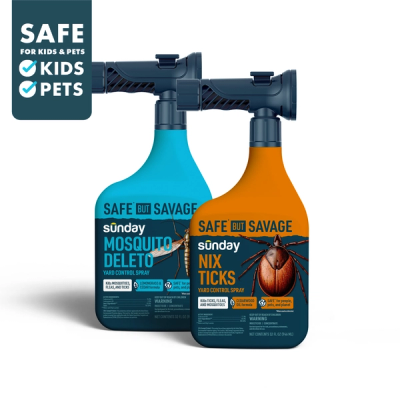
For weed and pest products, follow the label and let the lawn dry before you head back out. Nix Ticks and Mosquito Deleto are safe for kids and pets when used as directed.
Our grass seed is selected for disease resistance and lower inputs, which means less water and fertilizer, and fewer pesticides over the life of your lawn. And as a member of 1% for the Planet, we give back a portion of every sale.
If you'd rather not pick products yourself, our custom lawn plan starts with a lawn analysis and sequences the right products across the season, shipped when it's time to apply.
Lawn care products frequently asked questions
How do I choose the right lawn care products for my grass type and climate?
Start with a soil test so you feed what's actually missing. Then figure out your grass type. Cool-season grasses like fescue and bluegrass do best with spring and fall feeding, and seed best in September. Warm-season grasses like bermuda thrive with summer feeding, and seed best in late spring through summer. Your local climate sets the exact dates.
What lawn care products do I need to fix bare spots and thicken my lawn?
Pick a seed blend matched to your sun exposure, plus a starter fertilizer. For bare spots, shake on about 1 cup of patch mix per square foot. For thin areas, spread 1 pound per 15 square feet. Water 1 to 2 times daily until new grass reaches 2 inches, then return to your normal routine. Weed-prone areas usually need overseeding 1 to 2 times per season until the grass fills in.
Are Sunday lawn care products designed for use around pets and children?
Our fertilizers are pesticide-free and made with ingredients like seaweed, molasses, soy protein, and humic acid that break down quickly in soil. Weed and pest control products are different. Always read the label for re-entry directions, and let treated areas dry before pets and kids go back out. The claim "safe for kids and pets when used as directed" applies specifically to Nix Ticks and Mosquito Deleto.
What is the difference between a lawn care kit and buying individual products?
Kits bundle complementary products around one season or goal, so the pairing is done for you. Individual products give you more control if you already know what your lawn needs. If you're tackling your first DIY season, a kit is the easier starting point.
How do I know which weed control product is right for my lawn?
Start with what's growing and where. A thick lawn is your best defense, so overseed thin spots first and pull what you can by hand. If crabgrass shows up every year, apply pre-emergent before soil hits 55°F in spring. If dandelions or clover are already up in the lawn, spot-treat with an iron-based post-emergent. Weeds in beds or walkways call for a herbicidal soap formula instead. The goal is weeds at a tolerable level, not a blanket spray.
Complete your lawn care routine
A living, thriving yard usually takes more than one product working together. Here's where to go next:
- Lawn fertilizer: quick-greening liquids and slow-release granules for every lawn size.
- Grass seed: blends for sun, shade, pets, and pollinators.
- Weed killer: pre-emergent prevention and iron-based spot treatments.
- Lawn pest control: grub and fire ant control that starts with prevention.
- Pet products: urine-resistant seed and spot repair for dog yards.
- Custom yard kits: seasonal bundles with everything in one box.
Want us to tie it all together? Our custom lawn plan builds a schedule around your soil results and local climate, then ships each product right before it's time to apply.
Have a question about your yard? We're here to help.