












Ask Sunday
What seed do
I need?





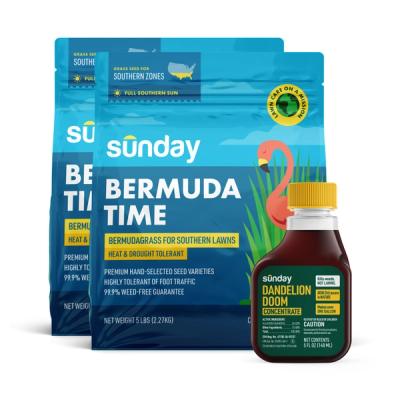








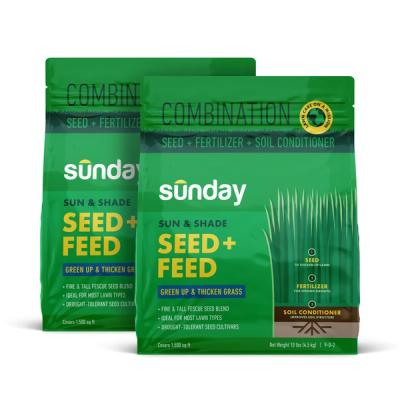

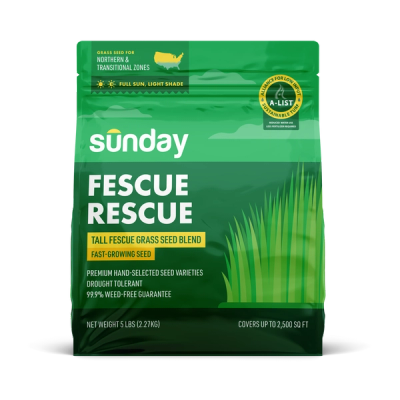

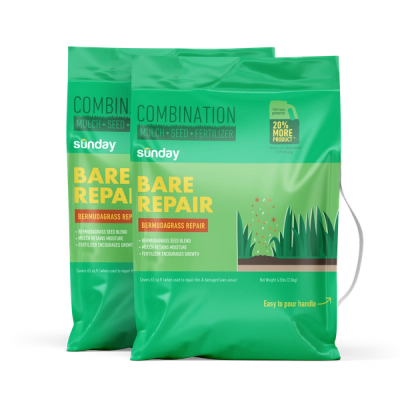

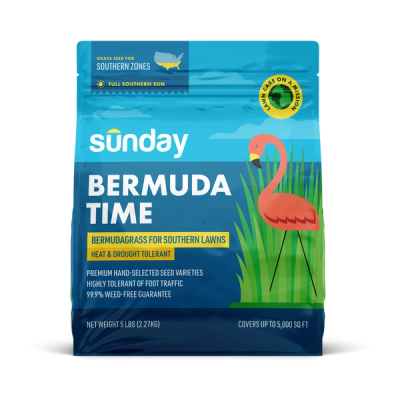

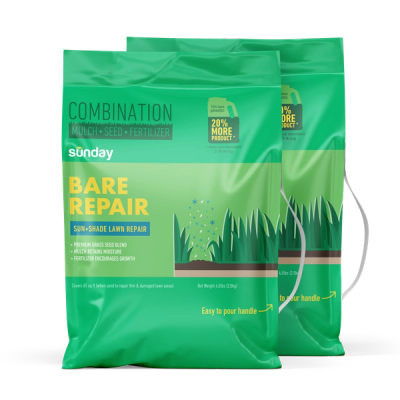



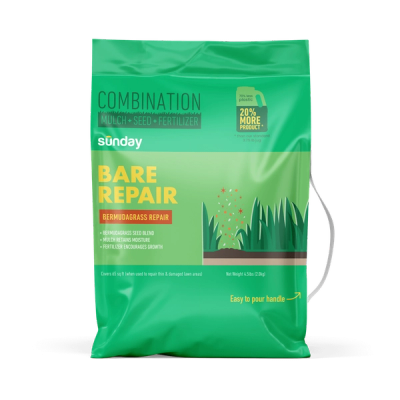



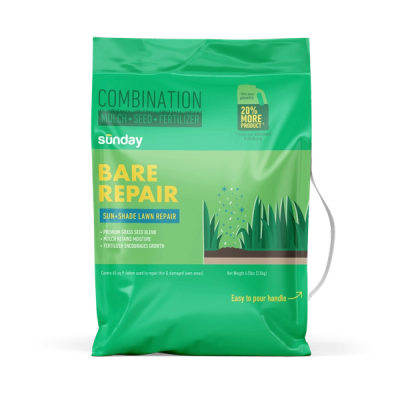




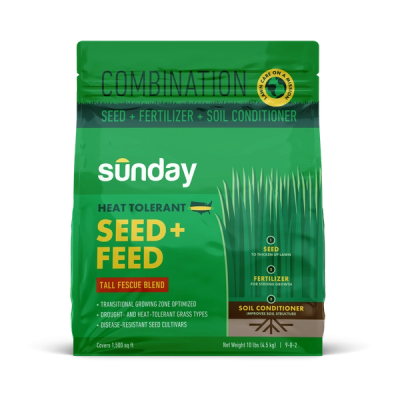

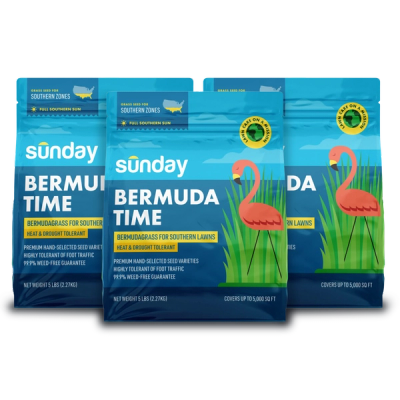

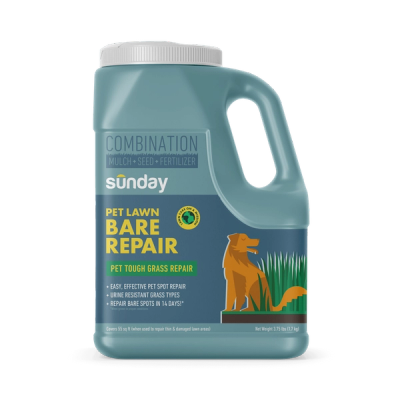

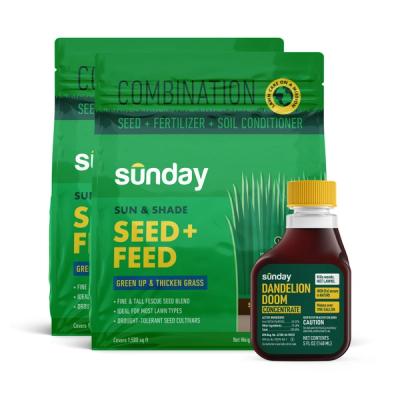



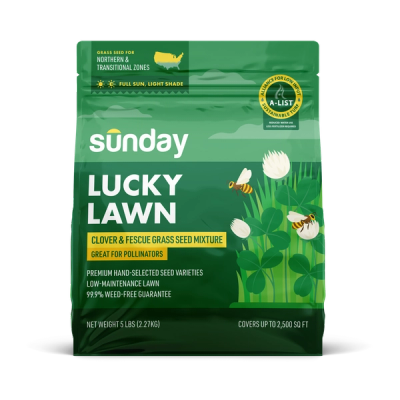

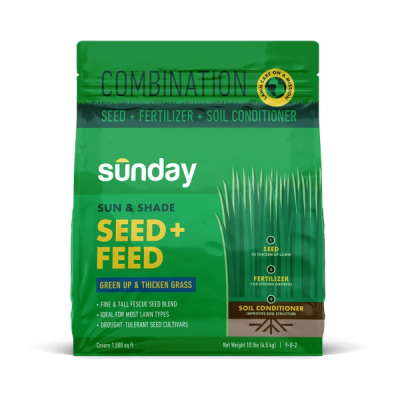


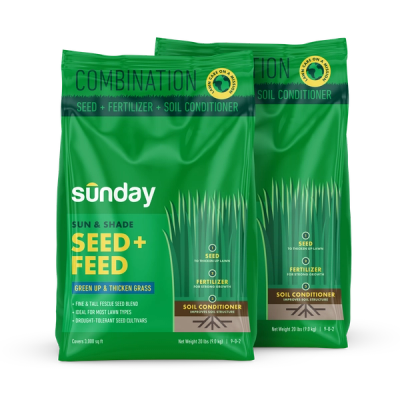
Grass seed for lawns that live it up
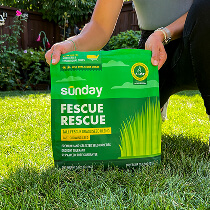
Grass seed is the starting point for a lawn that actually lives, not just looks alive. Whether you're thickening thin spots, patching where the dog did her thing, or growing from scratch, the right seed makes all the difference. Sunday blends are bred for resilience and real life, in cool-season and warm-season options for any yard.
Why this grass seed works
- 99.9% weed free guarantee
- Varieties bred for drought and disease resistance
- Handles heavy foot traffic and pet wear
- Grows in sun or shade
- Cool-season and warm-season options
Your grass seed questions answered
Q: Which grass seed is best for my climate and sun/shade conditions?
A: Your climate zone matters most. Northern or transitional areas do well with cool-season grasses like fescue or Kentucky bluegrass. Shade? Try fine fescue blends. Southern lawns thrive with bermudagrass in full sun.
Pro Tip: Not sure? Sunday's Seed Finder Tool matches you with the right mix in about a minute.
Q: What is the difference between cool-season and warm-season grass seed?
A: Cool-season grasses (fescues, Kentucky bluegrass, perennial ryegrass) thrive in northern climates between 55–75°F. Warm-season grasses (bermudagrass, zoysiagrass, St. Augustine) love heat and grow best at 70–90°F. Pick based on where you live, not what looks prettiest on the bag.
Q: When is the best time to plant grass seed in my area?
A: Cool-season lawns, early fall seeding or early spring seeding when temps stay between 55–75°F. Warm-season grasses prefer late spring to mid-summer at 70–90°F. Timing it right gives seeds the best shot at strong roots.
Q: How much grass seed do I need per square foot for overseeding versus bare spots?
A: For overseeding, most cool-season seeds need about 2 lbs per 1,000 sq ft. Starting from scratch or heavy repair? You'll need 5-8 lbs per 1,000 sq ft depending on the grass type. Bermudagrass is lighter at 1 lb per 1,000 sq ft for both. Check the bag for specifics.
Q: How long does grass seed take to germinate and fully establish?
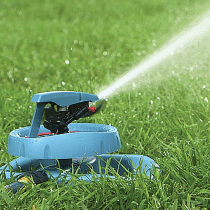
A: Depends on the grass. Perennial ryegrass sprouts fastest (3-7 days), fescues take 6-12 days, and Kentucky bluegrass needs patience (up to 21 days). Bermudagrass can take 7-21 days. Full establishment takes several weeks of consistent watering and avoiding heavy traffic.
Q: Is freshly seeded grass safe for kids and pets, and how soon can they use the yard?
A: Seeds are safe once watered in. The real reason to keep everyone off? Tiny seedlings need time to root without getting trampled. Wait until the grass hits about 2-3 inches, and you've mowed at least once. Then let the barefoot chaos resume.
Q: What makes Sunday grass seed different?
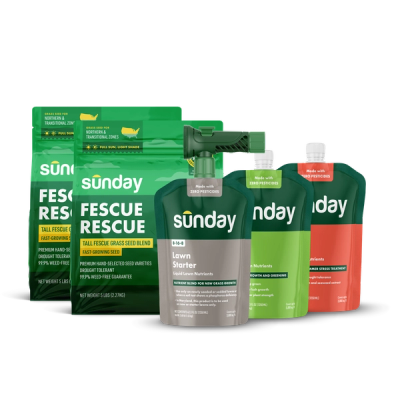
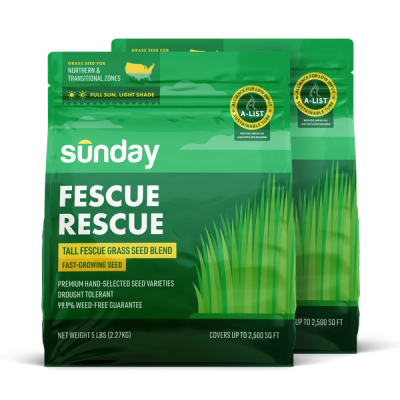
A: Sunday grass seed features A-LIST-approved varieties bred for drought resistance, disease tolerance, and lower maintenance. Available in cool-season blends for any northern or transitional yard.